Habit Tracker With Photo Proof: 6 Apps Compared (2026)
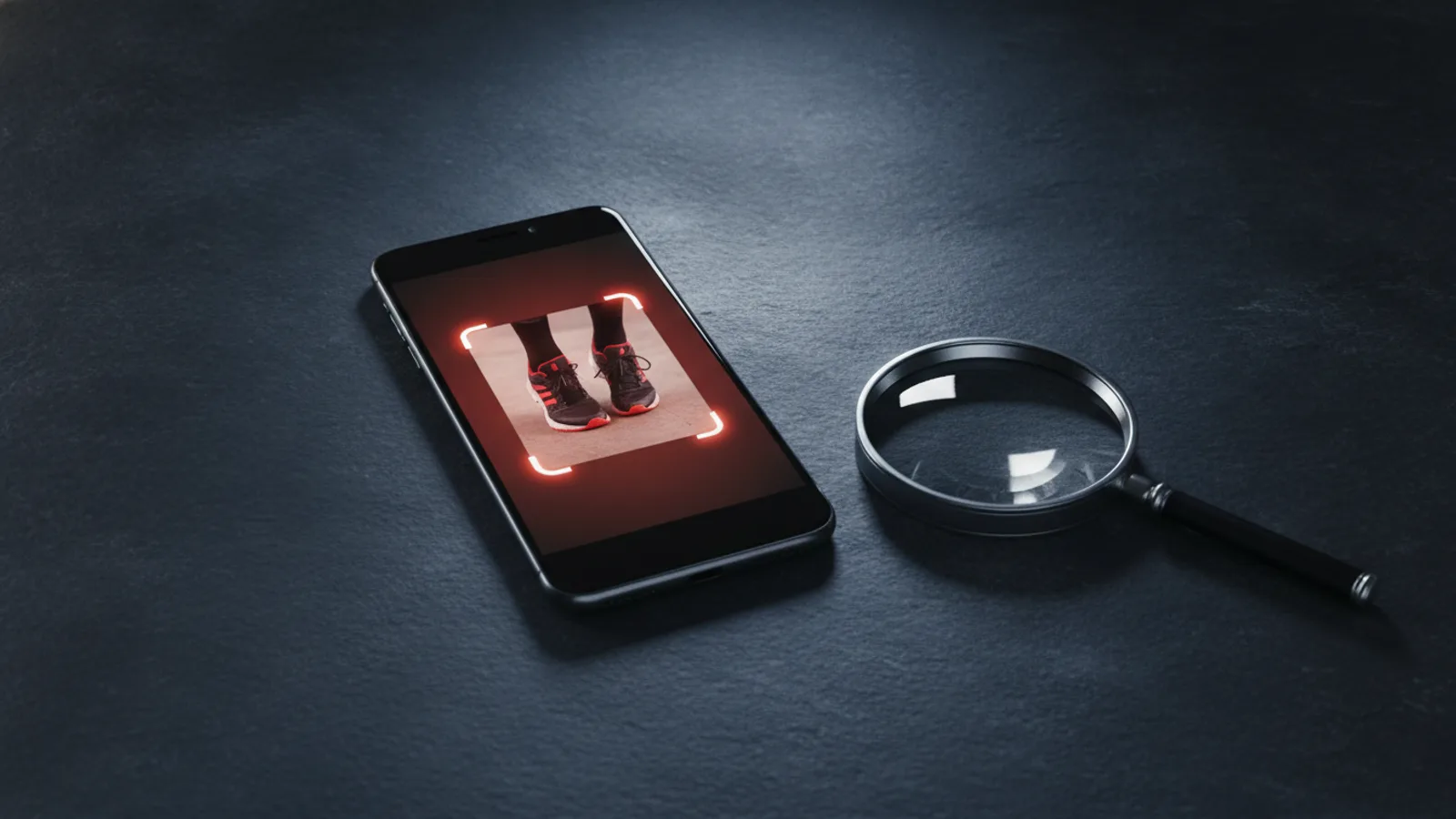
TL;DR: Most apps sold as a "habit tracker with photo proof" store the photo and check nothing, so the proof is decorative. Six apps are worth comparing, and they split into photo journals, apps that verify the photo, and apps that attach a consequence to it. If you want a photo check-in that costs you money when it does not arrive, try FineStreak free for 7 days, no card required. Photo proof is also the line that separates the AI accountability tools from each other.
The Short Answer
Photo habit trackers come in three tiers, and the search results mix them together.
Photo journals save your picture and build a timeline from it. Nothing examines the image. Momentum and Habit Tracker - Photo Habit sit here.
Verified proof puts a model or a person between your photo and your streak. Habit Doom runs the check on your own phone in under a second, and the verification is free including on its free tier. Proofs verifies with AI and shows the result to friends. Forfeit accepts photo, timelapse, GPS and Apple Health, reviews with AI, and sends anything uncertain to a human. That human step is the interesting seam, and we pull on it in Forfeit vs Beeminder.
Proof with a consequence adds money. FineStreak charges a fine you set when a verified check-in does not arrive, and an Agent calls or texts you at your check-in time. Forfeit also charges your card when the evidence fails.
If you have already abandoned two checkbox trackers, the tier you need is the third one, and why a consequence outperforms a record explains what changes when you move up a tier.
What "Photo Proof" Actually Means
The phrase is doing a lot of work in the App Store, and it hides the only question that matters: after you take the picture, does anything happen to it?
In a photo journal, no. The image is filed against the date and your streak advances because you pressed the button. That is a nicer scrapbook than a grid of ticks, and it genuinely helps some people, because looking back at forty gym photos is more persuasive than looking at forty checkmarks. Watching your own behavior does change it, which is most of what a checkbox app is selling. What it does not do is stop you marking a habit complete on a day you skipped it.
In a verified app, something reads the photo and compares it to what you said you would do. A picture of your desk does not satisfy a running goal. This is where the word "proof" starts to be accurate, and it is a real improvement, because the effort required to fake it rises from one tap to staging a scene.
In the third tier, the verification decides whether money moves. That changes the psychology rather than the technology. Loss aversion means the same amount hurts roughly twice as much when you lose it as it pleases you when you gain it, which is why a $5 fine you are about to pay tends to get you out the door when a broken streak does not.
Worth being honest about the ceiling here. No app can confirm you actually ran five miles from a photograph. What good verification buys you is a much higher cost of lying, applied at the moment you are deciding whether to bother.
Gamified trackers sit at the bottom of this ladder, which surprises people. Habitica's health system runs entirely on what you report, so the damage is as honest as you are. Our Habitica alternatives guide puts a verification column against the whole category.
The 6 Best Habit Trackers With Photo Proof
1. FineStreak
Mechanic: you set a goal, choose a fine, and pick a check-in time. Miss the check-in and the fine is charged through Stripe.
Verification: photo, screenshot and location. The photo is classified against the specific goal you set, so a picture that does not match the habit is rejected rather than filed.
Anti-cheat: the strongest part of the product, and the part no listing mentions. Every submitted photo is fingerprinted, and a near-identical repeat of a photo you already used is refused. The capture time is read from the file's own metadata, and the image is checked for the compression signature that editing leaves behind. For goals that turn on a number, such as a step count or minutes read, the fingerprint check is keyed to the value the model read, so photographing the same app screen tomorrow with a new number still counts as a new check-in.
What makes it different: the contact direction. Other apps wait for you to open them. FineStreak sends an Agent to call or text you at your check-in time, so a phone call arrives whether or not the app crossed your mind. The photo and the call that prompts it are two halves of the same check-in.
Fines: the slider starts at $0.10, and your ceiling is set by your rank, running from $3 at Committed, the rank where fines unlock, to $50 at Legendary.
Cost: 7 days free with no card. After that $20 per month standard, $8 on the entry tier, and $5 per month for life for the first 100 founding members.
Best for: the person whose real failure mode is quietly ticking a box they did not earn.
2. Habit Doom
Mechanic: a habit tracker built around app blocking. Instagram, TikTok and YouTube stay locked until the day's habits are checked in.
Verification: an on-device AI photo check the app calls Anti-Cheat. You photograph the evidence, an open book or a pair of running shoes, and a model running entirely on your iPhone confirms it in under half a second. Borderline photos give you the option to stand by the submission, retake it, or cancel, and each confirmation teaches the app what your version of that habit looks like.
Privacy: photos never leave the phone, and there is no account or sync.
Cost: Anti-Cheat is free for everyone, including the free tier. That is unusual, because verification is the expensive part and it is normally the first thing a free tier drops, a pattern we traced across the free accountability apps worth installing.
Best for: people whose habit fails because they opened a feed instead. The blocking and the proof reinforce each other, and it is the best free verification on this list.
3. Proofs: Photo Habit Tracker
Mechanic: snap a daily photo showing the habit is done, and build a streak from verified submissions. Built by Will Kusch under Relative Companies.
Verification: AI review of each proof. Submit something that fails verification and the app tells you so.
Social: the reason to choose it. You share your proof with friends, see theirs each day, and can run group habits alongside solo ones. Being seen is the enforcement mechanism here, and why check-ins work covers what that buys you.
Cost: free to download, then a subscription. Monthly tiers run $9.99 or $12.99, and annual pricing ranges from $24.99 to $49.99.
Best for: a group of friends who want to check in on each other daily and do not want money involved. If you are arriving from a friend-sharing tracker that never checked the evidence at all, HabitShare alternatives works through that upgrade path.
4. Forfeit
Mechanic: you name the task, the deadline and the amount you lose. Submit evidence before the deadline or your card is charged.
Verification: the widest range on this list. Photo, timelapse, Apple Health, web tracking, GPS and self-verification are all accepted. The AI reviews the submission first and escalates anything uncertain to a human verifier, and appeals are reviewed by a person within 12 hours.
Cost: Forfeit is free to download with a paid tier on top, and its Overlord AI agent runs inside the product and also ships as its own app. It publishes no prices on its own site, so check the current figure in the App Store listing. Whatever it is, the subscription is separate from the money you put at risk on your habits.
Best for: one-off commitments with unusual evidence, where a timelapse or a GPS trace proves it better than a photo would. We compared the rest of the field in Forfeit app alternatives.
5. Momentum
Mechanic: create a habit, photograph yourself showing up, and the app assembles the pictures into a timeline you can export as a recap video.
Verification: none, by design. The site's own framing is "no pressure to be perfect", and it accepts your visual record as it is. Data lives in your own iCloud account.
Cost: not published on the site, so check the current store listing before you commit.
Best for: documenting a habit you are already keeping. A year of daily photos is a genuinely motivating artifact, and it is the wrong tool if the problem is starting.
6. Habit Tracker - Photo Habit
Mechanic: a calendar tracker where each completion is a photo rather than a tick, with emoji and color customization and a comment field for how the habit felt. Built by Danilo Vilhena.
Verification: none. Photos never leave your device, and the app stores only the file names it needs to display them.
Cost: free to download. Pro is $0.99 monthly, $5.99 yearly, or $14.99 for lifetime access, which is the cheapest paid tier here by a wide margin.
Best for: someone who wants a prettier tracker and knows they will be honest with it.
Compared by What Happens to the Photo
Four of these six examine the photo and two file it. Of the four that examine it, two attach money to the result and two do not. A word count sitting in your editor is one of the easiest things a photo can settle, which is why it comes up again in the writing accountability comparison. Read the middle column first, because that is the one the App Store descriptions blur.
| App | Photo checked? | By what | Consequence for missing | Cost |
|---|---|---|---|---|
| FineStreak | Yes | Model, matched to your goal, plus re-use and edit detection | A fine you set, $0.10 to your rank cap | 7 days free, then $5 to $20/mo |
| Habit Doom | Yes | On-device model, under half a second | Your distracting apps stay locked | Free tier includes Anti-Cheat |
| Proofs | Yes | AI review, seen by friends | Friends see the gap | Free to install, $9.99 to $12.99/mo |
| Forfeit | Yes | AI, escalated to a human verifier | Your card is charged | Free to download, paid tier not priced on its site |
| Momentum | No | Nothing | None | Not published |
| Habit Tracker - Photo Habit | No | Nothing | None | Free, Pro from $0.99/mo |
Can You Cheat a Photo Habit Tracker?
Yes, and the interesting question is how much work it takes, because that is the number that decides whether you do it at 10:00 PM on a bad day.
Against a photo journal, cheating costs one tap. Any image satisfies it.
Against a verified app, you need an image that plausibly shows the habit. That rules out the lazy version and keeps the determined one available.
The re-send problem
The gap most apps leave open is the re-send. You genuinely went to the gym on Tuesday, you have the photo, and on Thursday you send Tuesday's photo again. It passes every check that only asks "does this picture show a gym", because it does.
FineStreak closes that one deliberately, and the mechanics are worth stating plainly because no app-store listing explains them:
- Perceptual fingerprinting. Every accepted photo leaves a compact fingerprint. A new submission that is visually near-identical to one you already used is refused, on a deliberately tight threshold so that genuinely similar but distinct photos still pass.
- Content keying for metric goals. Fingerprinting alone would punish anyone who checks in with a screenshot of the same fitness app every day. So when the model reads a value from the image, a step count, a distance, a page number, that value forms part of the signature. Same screen with a new number is a new check-in. Same screen with the same number is a re-send.
- Capture time. The file's own metadata carries the moment the shot was taken, which is read alongside the image.
- Edit detection. Recompressing part of an image leaves a measurable signature, and the system looks for it.
- Injection guarding. Text written inside an image that tries to instruct the reviewing model is flagged rather than obeyed, which matters more than it sounds once people work out that the reviewer reads.
None of this makes cheating impossible. It makes cheating more work than the habit, which is the only bar that has ever mattered. This is the same principle behind not breaking the chain, applied to the honesty of the chain rather than its length.
Which One Should You Pick
Start from what has already failed.
A checkbox tracker failed because you lied to it. Go to Habit Doom first, since verification is free there, and see whether the photo alone is enough friction.
A checkbox tracker failed because you forgot it existed. Verification will not help, because you were never in the app to fake anything. You need the app to reach you. FineStreak calls or texts at your check-in time, which is a different category of fix. The reasoning is in why check-ins work.
You keep the habit alone but drift after a bad week. Proofs, for the social pull, or Momentum if you just want the record.
Nothing has worked and you suspect the missing piece is consequences. You are looking at FineStreak or Forfeit. Both charge you for real. Forfeit accepts more evidence formats and suits discrete commitments with a deadline. FineStreak suits a recurring daily habit where the failure is not showing up, and your fine has a ceiling you earn through rank. If the money mechanic is the part you are unsure about, the evidence on financial penalties is worth reading before you commit, and the same mechanic applied to one specific habit is covered in charging yourself for skipping the gym.
You want data rather than photos. Beeminder reads from integrations instead, and stickK uses a human referee. Both predate this whole category and both still work, and neither examines your evidence, which is the trade-off we lay out in StickK vs Beeminder.
The Summary
A photo becomes verification only when something compares it to a promise, and it becomes enforcement when failing that comparison costs you something. Most apps in this search sell the first thing and let you assume the third.
Decide which tier your problem actually needs before you pay for any of them. If you have already proved to yourself that a tracker without teeth does not hold you, start a free week with FineStreak and test the part that comes first: an Agent at your check-in time and proof that actually gets checked. The trial carries no fines. A fine is something you add later, on the website, once you reach the Committed rank.
A note on fines: they are optional. A member who wants one sets it up on the FineStreak website, and the FineStreak iPhone app leaves fines out entirely.
Frequently Asked Questions
What is the app that takes a picture of yourself every day?▾
That search usually lands on two different kinds of app, and people are often looking for the second one. The first kind is a photo journal, where you snap a picture when you finish a habit and the app arranges the pictures into a calendar or a recap video. Momentum and Habit Tracker - Photo Habit both work this way, and nothing examines the photo. The second kind treats the photo as evidence, where a model or a person confirms the picture matches the habit you promised before your check-in counts. Proofs, Habit Doom, Forfeit and FineStreak all do that. If your problem is remembering what you did, a journal is fine. If your problem is that you mark habits complete when they are not, you want the second kind.
Which habit tracker with photo proof is best?▾
It depends on what you want the photo to trigger. Habit Doom is the strongest free option, because its photo check runs on your own phone in under a second and it locks your distracting apps until you check in. Proofs is the best social choice, since friends see your daily proof and group habits are built in. Forfeit accepts the widest evidence range, including timelapse, GPS and Apple Health, and escalates uncertain submissions to a human verifier. FineStreak is the one where a missed check-in costs money and an Agent calls or texts you at the time you picked, so the check-in reaches you even when you never open the app. Pick by consequence first, then by price.
Do habit trackers actually work?▾
Tracking helps, and the size of the help depends on what happens when you fail. Watching your own behavior changes it, and a checkbox app delivers that much on its own. The weakness is that a checkbox costs nothing to tick, so a tracker measures your honesty as much as your behavior. Adding proof closes part of that gap, because a photo is harder to fake than a tap. Adding a consequence closes more of it, since loss aversion means money you are about to lose pulls harder than a streak you are about to break. If a plain tracker has already failed you twice, the thing missing is usually enforcement, and a better grid will not supply it.
Can you cheat a habit tracker with photo proof?▾
You can cheat most of them, and the differences are worth knowing before you pick. Apps that only store the photo can be satisfied with any picture at all, including a screenshot of someone else's. Apps that check the photo against your goal reject an obvious mismatch. The harder problem is re-sending a real photo from a day you did complete the habit, and only some apps defend against it. FineStreak fingerprints every photo and refuses a near-identical repeat, reads the capture time from the file's own metadata, and looks for the compression signature left behind by an edited image. For metric goals it also keys on the number the model read, so a fresh screenshot of the same app with a new step count still counts.
Is there a free habit tracker with photo proof?▾
Yes, and one of them includes the verification itself. Habit Doom gives its Anti-Cheat photo verification to everyone, including free users, and runs the check on your device so nothing is uploaded. Habit Tracker - Photo Habit is free to download with an optional Pro tier at $0.99 per month. Proofs is free to install with a paid subscription for the full product, and Momentum does not publish pricing on its site, so check the store listing. Understand the trade before you choose free: the apps that charge money are usually the ones that put money on the line, and the pressure people are shopping for comes from the possible loss rather than from the app itself.

A checkbox costs nothing to tick.
FineStreak looks at your evidence. A vision model matched to your specific goal, EXIF capture time, and blocking so a photo from last Tuesday cannot be sent twice. Free for 7 days, no card.
See what real verification looks likeRelated Articles
Forfeit App Alternatives: 5 Real Options Compared (2026)
Looking for a Forfeit alternative? Here are 5 apps that charge you real money when you miss a habit, what each costs, and which fits your reason for switching.

App That Fines You for Missing Habits: 4 Apps Compared (2026)
An app that fines you for missing habits charges your card when you miss a verified check-in. See how the charge works and how the 4 main apps compare.
8 Beeminder Alternatives, Ranked by How They Charge You (2026)
Want a Beeminder alternative with a flat fine instead of an escalating pledge, or one that checks in so you don't log data? Compare 8 apps for 2026.

7 Best StickK Alternatives in 2026, Ranked by Bite
Want a StickK alternative with real teeth? Compare 7 commitment apps by verification, cost, and how hard each one is to ignore. Updated for 2026.