The Seinfeld Strategy: Why Don't Break the Chain Actually Works
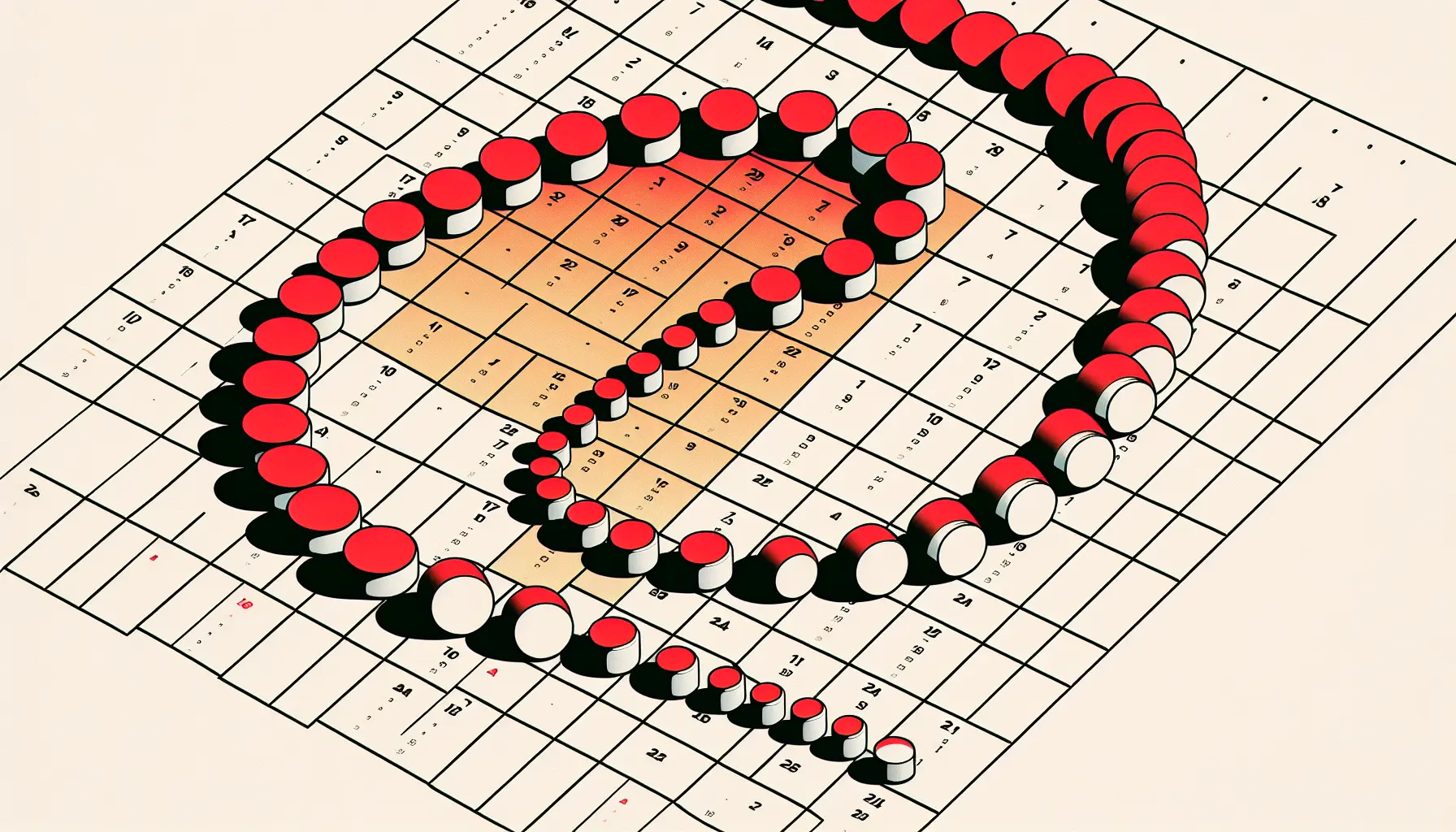
You don't need a complicated system to build lasting habits. Sometimes the most powerful tool is a calendar, a red marker, and one simple rule: don't break the chain.
This is the Seinfeld Strategy, and despite its simplicity, it's one of the most psychologically sound habit-building methods ever devised.
FineStreak is an accountability app that uses real fines and check-ins on the schedule you set to help people build lasting habits. The streak-and-fine structure is the Seinfeld Strategy with consequences attached: missing the chain costs real money, which is why the chain doesn't break.
Where the Strategy Comes From
The story goes like this: comedian Brad Isaac was doing open mics in the early days of his career when he met Jerry Seinfeld backstage. He asked Seinfeld for advice on becoming a better comedian. Seinfeld told him the secret was to write better jokes, and the secret to writing better jokes was to write every single day.
To do that, Seinfeld said, get a big wall calendar that shows the whole year. Every day you write, draw a big red X over that day. After a few days, you'll have a chain of X's. Your only job is to keep the chain going. Don't break the chain.
Isaac shared this story on a developer forum in 2007. It went viral. Productivity coaches, habit researchers, and millions of people adopted it. The "Seinfeld Strategy" was born, though Seinfeld himself has said he doesn't remember giving the advice and doesn't actually use the method himself.
The story may be apocryphal. But the strategy works regardless of who invented it.
The Psychology Behind Streaks
Why does a simple chain of red X's on a calendar motivate people more than vague intentions? Several psychological mechanisms are at play - for a deep dive on the science, see the psychology of habit streaks. If you want an app to keep the chain for you, the Streaks alternatives comparison covers the main options on both platforms.
Visual Progress and the Zeigarnik Effect
The human brain is wired to remember unfinished tasks. Psychologist Bluma Zeigarnik discovered in the 1920s that we think about incomplete tasks far more than completed ones - this is why a TV cliffhanger keeps you thinking about the show, or why a half-written email nags at you during dinner.
A streak creates an ongoing, incomplete task. Every day without an X is a gap that the Zeigarnik effect makes uncomfortable to leave unfilled. The chain isn't finished yet. You need to keep going.
Loss Aversion
Research by behavioral economists Daniel Kahneman and Amos Tversky showed that the pain of losing something is roughly twice as powerful as the pleasure of gaining the equivalent thing. A 5-day streak feels like something valuable to protect. Missing a day feels like losing that value.
This is why people will work hard to "not break" a streak even when they don't feel motivated to work toward the positive goal itself.
Visual Momentum and Progress Bias
There's something called the "endowed progress effect" in psychology: when people feel they've already made progress toward a goal, they're more motivated to complete it. The accumulating chain of X's isn't just a record - it's evidence of momentum. The longer the chain, the more motivated you feel to continue.
Habit tracking apps like Duolingo have built entire user engagement systems around this principle. It works.
Habit Loop Reinforcement
The Seinfeld Strategy naturally creates the habit loop that researcher Charles Duhigg identified in The Power of Habit: cue, routine, reward. The calendar is a daily cue. The activity is the routine. Marking the X is the reward. After enough repetitions, the loop becomes automatic.
What "Don't Break the Chain" Actually Means for Your Brain
When you go a few days without marking your X, something happens that's more significant than just missing days. The habit loop is disrupted. Research on habit relapse shows that the longer a break, the harder it is to restart - not because willpower is depleted, but because the neural pathways that make a behavior automatic begin to weaken.
A 2010 study at University College London found that it takes an average of 66 days for a new behavior to become automatic. But the keyword is average - some habits took as few as 18 days, others up to 254. Throughout that formation period, consistency matters more than anything else.
Missing two days in a row was more detrimental to habit formation than missing one day occasionally. The chain metaphor captures this: one broken link weakens the whole structure.
How to Implement the Seinfeld Strategy
Step 1: Choose One Habit
The Seinfeld Strategy works best for a single, specific behavior. "Be healthier" is not a habit. "Do 10 push-ups before breakfast" is. The more concrete the behavior, the easier it is to mark that X with certainty that you've earned it.
Strong candidates:
- Write 250 words every morning
- Do 20 minutes of exercise
- Practice a language for 15 minutes
- Read 10 pages of a book
- Meditate for 10 minutes
Step 2: Get a Physical Calendar
Digital tools work, but there's a reason physical calendars have an edge here. The act of physically crossing out a day with a marker is more visceral and satisfying than tapping a screen. You see the calendar on the wall every day. It's always visible. It's always watching.
A wall calendar that shows all 12 months at once is ideal, because you can see the entire year's chain at a glance. This long-range view makes even a 30-day chain feel like a small portion of the full goal, which motivates rather than satisfies.
Step 3: Define Your Minimum Viable Action
This is where most people make a mistake. They set the daily requirement so high that missing a day feels inevitable. "Write 2,000 words every day" is a recipe for breaking the chain and quitting.
Instead, set the minimum requirement low enough that you can do it even on your worst days. This is closely related to the two-minute rule for habits - lowering the floor is how you protect the chain. If you want to be a writer, "write 250 words" is your chain behavior. On great days, you'll write 2,000. But you always protect the chain.
This is sometimes called the "never miss twice" approach: be ambitious most days, but define a floor that protects the streak. Micro-habits and tiny wins explores the research behind why small actions compound into big results.
Step 4: Handle the Exceptions in Advance
Life happens. Travel, illness, emergencies. Rather than letting an unavoidable break shatter the chain completely, decide in advance what your exceptions policy is. Travel is the most predictable of these, and our guide to protecting a routine on the road covers the planning that keeps a chain intact.
Some practitioners give themselves one "mulligan" per month - a day they can skip without ending the streak, but they mark it differently (a circle instead of an X). Others decide that any week with 5 out of 7 X's counts as an unbroken chain.
Building in exceptions isn't cheating - it's being realistic about the difference between a meaningful streak and a fragile one.
What the Seinfeld Strategy Is Not
It's worth clarifying some misconceptions.
The behavior is what counts, more than the output. The chain tracks whether you showed up, and it stays silent on how well you performed. A mediocre writing session still earns an X. A slow run still earns an X. This removes the perfectionism that kills habits.
The chain serves your goals, it does not replace them. The chain is a system that supports the goal rather than standing in for it. You still need to know why you're writing every day or exercising every day. The chain is the engine; your purpose is the destination.
It doesn't scale to 20 habits. If you try to keep 10 chains going at once, you'll break them all. The strategy works through focus. One chain, one habit, relentless consistency.
The Seinfeld Strategy and Accountability
The strategy's biggest weakness is that it's self-reported. You're marking your own X's. No one is watching. No one is checking. And research consistently shows that self-accountability is weaker than social accountability.
This is why the most effective implementations of the Seinfeld Strategy pair the physical chain with an external accountability system. You maintain your own calendar, but you also report your streak to someone else - a partner, a group, or a platform that tracks and records your commitment.
When you know someone else can see whether you broke the chain, the loss aversion effect intensifies. Breaking the chain doesn't just feel like losing your own streak - it feels like letting down someone who believed in you.
Apps like FineStreak take this principle further. By combining streak tracking with regular check-ins, they create both the visual chain and the social accountability loop. The streak becomes a shared commitment rather than a private record.
Real-World Results from Chain Tracking
Users who've reported using chain-based habit tracking consistently describe similar progressions:
After two weeks, marking the X becomes a satisfying ritual they look forward to. After a month, the habit feels less like a choice and more like a default behavior. After two months, missing a day feels genuinely wrong - like skipping lunch without noticing.
This progression matches the neurological research on habit formation. The chain method works not because of the chain itself, but because it creates the consistent repetition that allows neural pathways to solidify.
When the Chain Breaks
It will break eventually. Illness, emergency, a truly exceptional circumstance - or just a bad day where you chose rest over your habit. When it does, the habit relapse recovery guide walks through the exact steps to bounce back. When it does, the response matters more than the break.
Studies on self-compassion and habit relapse show that people who treat a slip as a catastrophe are more likely to spiral into extended breaks than people who treat it with self-compassion and restart immediately.
The right response to a broken chain is simple: draw a new first X tomorrow. Note what caused the break. Adjust your minimum viable action if needed. Restart.
A chain of 47 days, a break, then a chain of 200 days is vastly more valuable than quitting after the first break.
Starting Your Chain Today
You don't need to wait for Monday, January 1st, or the "right time." Pull up a calendar, pick one habit, and mark today as Day 1.
The only rule: don't break the chain.
After a few weeks of seeing those X's accumulate, you'll understand why this elegantly simple strategy has outlasted almost every complicated productivity system ever invented. The chain doesn't lie, doesn't negotiate, and doesn't accept excuses. It just grows, one day at a time.
And when you look at a wall covered in red X's three months from now, you'll understand exactly how habits are actually built - not in grand gestures or intense bursts, but in the quiet accumulation of daily choices.
The Bottom Line
The Seinfeld Strategy works because it converts willpower into geometry. A growing chain is harder to break than a vague intention is to keep. Pick one habit, lower the bar so you can hit it on your worst day, and do not break the chain.
FineStreak is an AI accountability agent that helps you succeed at your goals through calls, texts, and photo verification. You set the rules: how strict, what counts, what it costs when you miss. The system meets you where you are. It shows up so you can show up for yourself.
A note on fines: they are optional. A member who wants one sets it up on the FineStreak website, and the FineStreak iPhone app leaves fines out entirely.
Frequently Asked Questions
What is the Seinfeld Strategy?▾
The Seinfeld Strategy is a habit-building method where you mark a big red X on a wall calendar every day you complete your chosen behavior. Your only job is to keep the chain of X's going. The method became famous after a 2007 forum post recounting comedian Brad Isaac's encounter with Jerry Seinfeld, who advised writing every day to build the skill.
Does the Seinfeld Strategy actually work?▾
Yes, when applied to a single specific behavior. It taps three documented psychological mechanisms: loss aversion (losing a streak feels twice as painful as gaining one), the Zeigarnik effect (incomplete tasks nag the brain), and the endowed progress effect (visible accumulation drives motivation). Apps like Duolingo built billion-dollar engagement systems around the same principle.
How long should my chain be before the habit sticks?▾
Research from University College London puts the average at 66 days for a behavior to become automatic, but the range is 18 to 254 days depending on the habit's complexity. Throughout that window, consistency matters more than intensity. Missing two days in a row is more damaging than missing one day occasionally.
Should I use a digital tracker or a paper calendar?▾
A wall calendar has a documented edge for most people because the calendar is always visible, the act of crossing out is more visceral than tapping a screen, and a 12-month view shows the chain in full context. Digital trackers are easier to skip without feeling friction, which is exactly what the Seinfeld Strategy is designed to prevent.
What happens if I break the chain?▾
Start a new chain tomorrow. Self-compassion research shows that people who treat a slip as a catastrophe are far more likely to spiral into extended breaks than people who restart immediately. A chain of 47 days, a break, then a chain of 200 days is vastly more valuable than quitting after the first miss.
Can I track multiple chains at once?▾
It is possible but not recommended. The strategy works through focus. Most people who try to keep five or more chains simultaneously break them all within a month. Pick one keystone habit, run that chain until it is automatic (typically 60 to 90 days), then add a second chain.

A broken streak costs nothing. That is the problem.
FineStreak attaches something real to the miss, on the schedule you set, with the amount you chose. Setting a fine is optional. Free for 7 days, no card.
Make the miss cost somethingRelated Articles

Why Do I Keep Quitting the Gym? Where Each Attempt Breaks
Most gym attempts break at the same few points, and the first missed session is the most fixable. Here is the real dropout data and a restart plan that holds.
Why Do I Keep Quitting Things? The Mechanism Behind It (2026)
You quit because one missed day sets off an all-or-nothing cascade. Here is the named mechanism, the five reasons people abandon goals, and what to change.

10 Best Habit Tracking Apps in 2026 (Free and Paid)
The 10 best habit tracking apps in 2026, honestly reviewed. Free and paid picks for iOS, Android, and web, plus what actually makes habits stick long term.

Habit Streaks Psychology: Why the Chain Hurts to Break (2026)
The psychology behind streaks, explained. Loss aversion, the Seinfeld method, Duolingo's 37M-user data, and a 2025 study on why streak rewards beat flat pay.