The Willpower Depletion Myth: What 23 Labs Actually Found
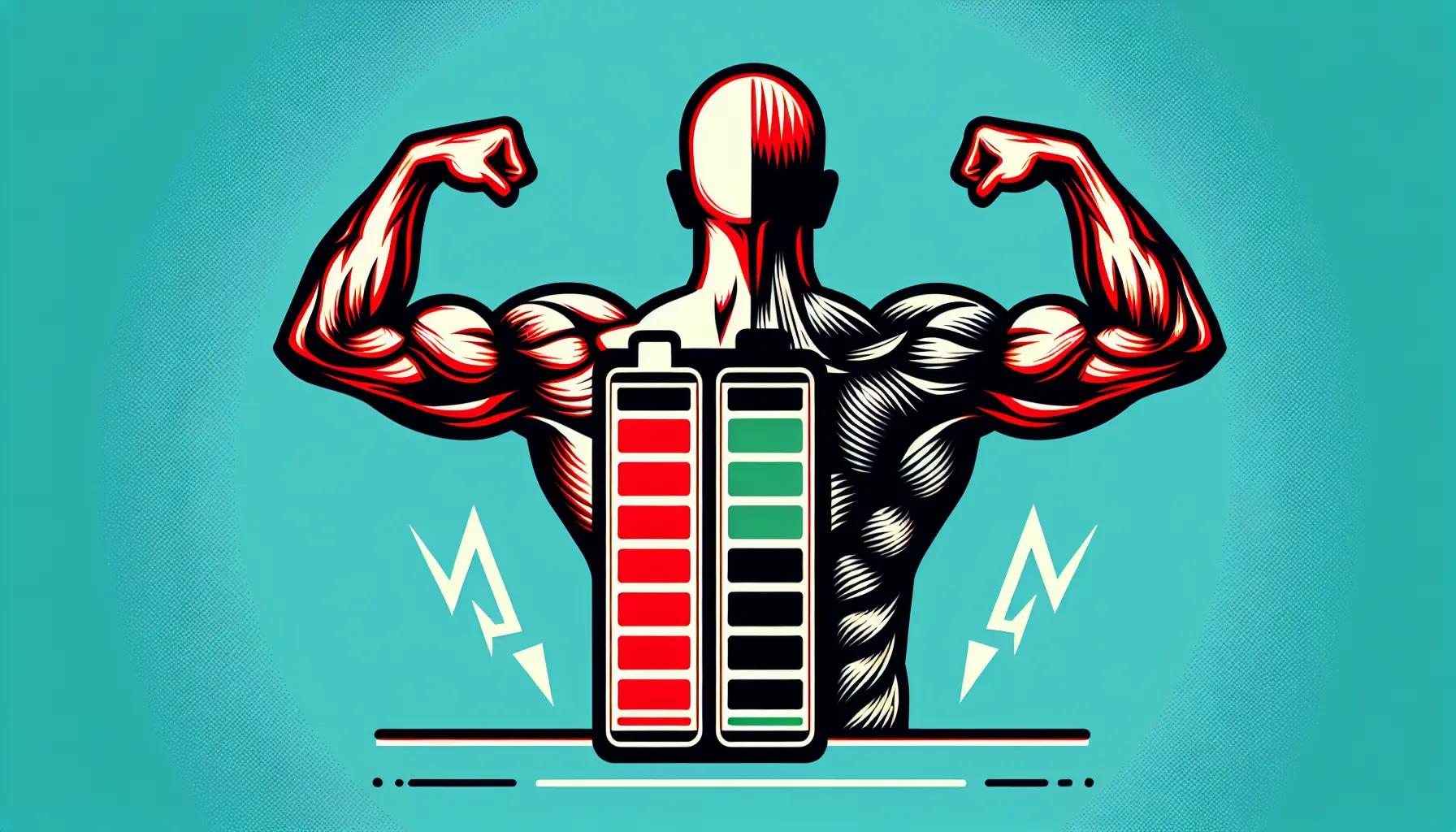
TL;DR: The famous idea that willpower is a limited resource you "use up" throughout the day has largely been debunked. A massive 23-lab replication found the effect was essentially zero. What actually matters is what you believe about your willpower, plus the systems you build around yourself.
The Cookie Experiment That Launched a Thousand Self-Help Books
In 1998, psychologist Roy Baumeister ran an experiment that would reshape how millions of people think about self-control. The setup was simple. Participants walked into a room filled with the smell of freshly baked chocolate chip cookies. Some were told to eat the cookies. Others were told to resist the cookies and eat radishes instead.
Afterward, both groups attempted an unsolvable puzzle. The radish group quit significantly faster than the cookie group. Baumeister's conclusion: resisting the cookies had drained their willpower, leaving less in the tank for the puzzle.
This became the ego depletion model. Willpower, according to this theory, works like a battery. Every act of self-control drains it. By evening, you're running on empty. That is why you eat the ice cream at 10 PM after making responsible choices all day.
The idea spread everywhere. It showed up in bestselling books, TED talks, corporate wellness programs, and productivity blogs. It became the go-to excuse for anyone who broke a diet, skipped a workout, or lost their temper after a long day. "My willpower was depleted" became a culturally accepted explanation for caving in.
The books are still on the shelves, which is why our ranking of the discipline and self-control books marks which titles rest on this model and which do not. Two of the ten do.
There was just one problem. When scientists tried to replicate the finding at scale, they couldn't.
Ego Depletion Debunked: What the Replication Crisis Revealed
The first cracks appeared in 2015. Evan Carter and colleagues re-analyzed the original meta-analysis that had claimed a strong effect size of d = 0.62 for ego depletion. After accounting for publication bias (the tendency for journals to publish only studies that find an effect), they concluded the true effect might be zero. Not small. Zero.
Then came the knockout blow. In 2016, a registered replication effort organized by Martin Hagger brought together 23 independent laboratories and 2,141 participants to test ego depletion under tightly controlled conditions.
23 laboratories tried to replicate the ego depletion finding in 2016. The effect size across 2,141 participants? Essentially zero: d = 0.04.
To put that number in context, an effect size of 0.04 is so small it is indistinguishable from noise. The 95% confidence interval ranged from -0.07 to 0.15, meaning the true effect could plausibly be negative, nonexistent, or trivially small. None of those options support the claim that willpower is a limited resource that gets depleted by mental effort.
This did not mean the original researchers fabricated anything. Baumeister's initial study was a legitimate experiment. But small sample sizes, flexible analysis methods, and the publishing incentive to find positive results had inflated the apparent effect. When you run a tight, pre-registered replication with large samples across multiple countries, the effect vanishes. The radish-cookie experiment is now famous less for its original finding and more for being one of psychology's most prominent replication failures.
The willpower depletion myth had been built on shaky foundations for nearly two decades. Entire coaching industries, corporate training programs, and bestselling productivity frameworks were built on the assumption that willpower is like a muscle that fatigues with use. The correction matters, because if you believe willpower is finite, you behave accordingly. If you want the broader picture of which self-control findings held up and which collapsed, our self-discipline research roundup covers the full ledger.
Your Beliefs About Willpower Shape Your Actual Willpower
This is where the research gets genuinely useful. In 2010, Veronika Job, Carol Dweck, and Gregory Walton published a study in Psychological Science that flipped the ego depletion narrative on its head. They found that what you believe about willpower predicts whether you experience depletion.
Participants who believed willpower was not a limited resource showed no performance drop after completing demanding tasks. Those who believed it was limited performed worse, exactly as the ego depletion model would predict.
| Belief About Willpower | Effect After Hard Task |
|---|---|
| "Willpower is limited" | Performance drops significantly |
| "Willpower is not limited" | No performance drop observed |
Dweck's team then tested this during one of the most willpower-intensive periods of college life: finals week. Students who believed willpower was unlimited showed less procrastination and better eating habits than students who believed it was a finite resource. Same stress. Same workload. Different beliefs, different outcomes.
As Veronika Job put it: "If you think of willpower as something that's biologically limited, you're more likely to be tired when you perform a difficult task. If you think of willpower as something that is not easily depleted, you can go on and on."
The mechanism is straightforward, and it has nothing to do with believing harder. When you believe a hard task has drained you, your brain looks for an exit. You interpret normal fatigue as a signal that you have nothing left. You give yourself permission to quit. But when you believe you can sustain effort, you push through the same level of fatigue and keep performing.
The practical implication is direct: stop telling yourself you are out of willpower. That narrative creates the very limitation it describes. You are not a phone at 3% battery. You are a person experiencing normal fluctuations in energy and focus, and your response to those fluctuations is shaped by your expectations.
What Actually Drains Self-Control (Willpower Is Not a Limited Resource)
If willpower is not a depletable resource in the way Baumeister originally proposed, what does make self-control harder at certain times? The research points to a few concrete factors.
Sleep is the big one. Sleep deprivation impairs prefrontal cortex function to a degree comparable to mild intoxication. Your prefrontal cortex handles executive function, planning, and impulse regulation. When it is compromised by poor sleep, every act of self-control becomes genuinely harder. The cause is the brain region responsible for impulse control underperforming, which is a sleep problem with a sleep fix.
Recovery sleep restores this capacity. So the person who blames their late-night snacking on "willpower depletion" might more accurately blame it on sleeping five hours the previous night.
Decision fatigue is real, but misunderstood. Making many consecutive decisions does create mental fatigue. But this is more about cognitive load than some mystical willpower reserve draining away. The fix is to reduce unnecessary decisions altogether through better habits and routines.
Stress and emotional regulation consume genuine cognitive resources. Managing anxiety, suppressing frustration, or performing emotional labor at work does make subsequent tasks feel harder. That is ordinary fatigue, and the label matters because fatigue can be addressed through rest, environment design, and support systems. Depletion implies you have hit a wall and must wait for a mysterious refill.
Blood glucose was once cited as the biological mechanism behind ego depletion. Baumeister himself proposed that self-control literally consumed glucose. This claim has been heavily criticized, and the fuller story of what nutrition actually does to your self-control is more nuanced. Your brain does use glucose, but it has consistent access to it through normal metabolic processes. You do not run out of brain fuel from resisting a cookie.

Building Systems That Don't Require Willpower at All
Once you stop treating willpower as a finite daily budget, your entire approach to self-discipline changes. Instead of anxiously rationing some invisible resource, you focus on building systems that make the right choice easier.
This is the difference between discipline and motivation. Motivation fluctuates. Discipline can be unreliable too, if it depends entirely on an internal state. But a well-designed system works regardless of how you feel.
Reduce friction for good behaviors. Put your running shoes by the door. Prep meals on Sunday. Delete social media apps from your phone. Each of these changes removes a decision point where you would otherwise need to "exercise willpower."
Increase friction for bad behaviors. Move the candy to the top shelf. Require a 10-minute delay before any impulse purchase. Log out of streaming services so each session requires an active choice. You are not conserving willpower. You are eliminating the need for it.
Build external accountability into your day. When someone else expects you to show up, the internal debate disappears. You don't lie in bed arguing with yourself about whether to go to the gym because your training partner is waiting. You just go. The decision was made for you by the system you built. A check-in via AI phone call at the time you set works on the same principle when a human partner is not practical. This same principle applies to stopping procrastination: external structure does the work that resolve keeps failing to do.
Think about delayed gratification the same way. The classic marshmallow test framed self-control as a trait you either have or lack. But the kids who succeeded often used strategies: covering the marshmallow, turning away, singing songs. They did not white-knuckle their way through. They changed their environment. That is the blueprint for adult self-control too.
How FineStreak Approaches This
FineStreak was designed around a specific insight: you should never rely on willpower alone to stay accountable.
FineStreak is an accountability app built on that idea. You set a goal and the days and time you want to be checked on, and an Agent calls or texts you at that time and asks whether you followed through. The contact arrives on your schedule, whatever your mood or energy level that day, and you answer it rather than having to remember to open anything.
This removes the willpower bottleneck entirely. You do not need to summon the motivation to open an app, write a journal entry, or check in with a friend. The system comes to you. Members who want more weight behind it can switch on a fine for a goal, an amount they choose themselves once they reach the rank where fines unlock, which keeps the cost of breaking the commitment concrete. External pressure like this works best as scaffolding while the behavior takes hold, which is the practical upshot of the intrinsic versus extrinsic motivation research. For a deeper look at why this format works, see our explainer on how AI phone calls boost accountability.
The research is clear: beliefs shape behavior, and systems beat willpower. FineStreak builds the system so you can stop worrying about whether you have enough self-control left in the tank. You don't need to manage a battery. You need a structure that still holds on your worst days.
Try it free for 7 days, no card required.
A note on fines: they are optional. A member who wants one sets it up on the FineStreak website, and the FineStreak iPhone app leaves fines out entirely.
Frequently Asked Questions
Is willpower really a limited resource?▾
Large-scale replication studies suggest it is not. The original ego depletion research failed to replicate across 23 labs and 2,141 participants, with the effect size dropping to essentially zero. Your beliefs about willpower may matter more than any biological limit.
What was the ego depletion experiment?▾
Roy Baumeister's 1998 study had participants resist freshly baked cookies and eat radishes instead. Those who resisted cookies quit a subsequent puzzle faster than those who ate cookies freely. It was used to argue willpower is a finite resource, but later large-scale replications could not reproduce the effect.
How can I build self-discipline without relying on willpower?▾
Design your environment to reduce the number of decisions you face. Build systems and habits that make the right choice automatic. External accountability, like daily check-ins or a check-in partner, also removes the burden of relying on willpower alone.
If ego depletion was debunked, why do I still feel drained by self-control?▾
Real fatigue exists. It just is not caused by a depleting willpower battery. Poor sleep, decision fatigue, stress, and emotional regulation all consume genuine cognitive resources and make self-control harder. The fix is addressing those root causes through rest, simplified routines, and support systems, not rationing a mysterious internal resource.
Did the original ego depletion researchers do anything wrong?▾
No fabrication. The 1998 study was a legitimate experiment, but small sample sizes, flexible analysis methods, and publication bias toward positive results inflated the apparent effect. When pre-registered replications with large samples ran in 2016, the effect disappeared. The same pattern ran through much of psychology's replication crisis.
What works better than willpower for daily habits?▾
External structure: a check-in someone else expects, at a time decided in advance. FineStreak is an accountability app whose Agent calls or texts you at the check-in time you set for each goal, with an optional fine you choose, which takes the willpower question off the table. You are not relying on how you feel in the moment. The system runs whether you feel ready or not.

The mechanism, pointed at your Tuesday.
Knowing why habits fail changes nothing on its own. FineStreak puts a check-in on the calendar, asks for proof, and applies the consequence you chose. Free for 7 days, no card.
Put it into practiceRelated Articles

How to Build Self-Discipline: A Research-Backed Guide (2026)
Build self-discipline with research-backed systems. See why willpower fails, what the Dunedin Study proves, and how real consequences triple follow-through.

Discipline vs Motivation: Why One Always Wins
Discipline beats motivation every time. See the Stanford research, why willpower fails, and the 3 systems that work when you don't feel like it.

How to Stop Being Lazy: Change What Skipping Costs You
Most advice treats laziness as a mood to manage. Here is the structural cause, how to tell it apart from burnout, depression or ADHD, and what to change first.
Self-Discipline Research: 10 Studies and What Still Holds Up (2026)
10 landmark self-discipline studies reviewed with modern replications. What held up, what got debunked, and what it means for building your daily habits.