What Is Habit Stacking and Why Is Everyone Talking About It?

TL;DR: Habit stacking is the trick of gluing a new habit to one you already do without thinking. You use an existing routine as the launch pad, which is why it works when willpower and motivation fail.
You have probably seen the phrase in a podcast clip or a dog-eared copy of Atomic Habits. Maybe a friend told you she started doing pushups every time she brushed her teeth and suddenly had a fitness routine. That is habit stacking. And the reason it is having a moment is not marketing. It is math.
Most habit advice assumes you will remember. You will not. Habit stacking removes remembering from the equation by bolting the new thing onto something your brain is already running on autopilot.

Habit Stacking Definition: The Formula That Started a Movement
The habit stacking definition everyone quotes comes from James Clear: "After [CURRENT HABIT], I will [NEW HABIT]." Simple. Almost embarrassingly so.
But the science behind it is deeper than a catchy template. BJ Fogg, who runs the Behavior Design Lab at Stanford, has been teaching a version of this since long before Atomic Habits hit shelves. He calls it "anchoring," and his Tiny Habits method has put thousands of participants through 5-day programs built on one idea: the existing routine is the prompt, and without a prompt the new behavior never fires.
Fogg's Behavior Model breaks it down as Behavior equals Motivation times Ability times Prompt. Most people obsess over motivation. They buy journals, watch YouTube videos, pump themselves up. Then Tuesday comes and they forget. A habit stack fixes the prompt problem permanently because the prompt is already happening every single day.
The habit stacking meaning, stripped to its core: stop inventing new triggers. Borrow old ones.
Why Your Brain Loves a Habit Stack
Here is where it gets interesting. Habits actually live in a different part of your brain than deliberate decisions.
Ann Graybiel's lab at MIT showed in a 2008 Annual Review of Neuroscience paper that habits get stored in the basal ganglia, the ancient machinery deep in your brain. Once a behavior becomes habitual, activity shifts away from the prefrontal cortex, the thinking part that gets tired. The result is that running a habit costs almost no cognitive energy.
When you stack a new habit onto an existing one, you are essentially getting a free ride on neural circuitry that is already humming. Your coffee routine is not something you think about. It just happens. Bolt a 60-second stretch onto the end of it and the stretch starts inheriting that same automatic quality.
Implementation intentions, the formal name for habit stacking, make goal achievement 2 to 3 times more likely across 94 studies with over 8,000 participants, an effect size of d=0.65 according to Gollwitzer and Sheeran's landmark 2006 meta-analysis.
That is not a small bump. That is one of the largest, most replicated findings in behavior change research. And it happens without adding motivation, guilt, or a single affirmation.
Wood and Neal, writing in Psychological Review in 2007, went further. They found that context-dependent repetition is the single strongest predictor of whether a behavior becomes automatic. Translation: same place, same time, same trigger, over and over. Habit stacking gives you all three for free.
What a Real Habit Stack Looks Like
Abstract explanations are fine. Concrete ones stick. Here is how a habit stack actually gets built in the wild.
A simple morning habit stack:
- Existing habit: Pour morning coffee (you already do this)
- Anchor point: While the coffee brews, roughly 90 seconds
- New habit: 10 pushups against the kitchen counter
- Result: You have done pushups before 7 AM without deciding to
Now compare that to the old approach. "I will work out in the mornings." No trigger. No time. No location. Wednesday arrives and you are scrolling your phone by 7:15. The stack wins because the decision was made once, in advance, and then handed to your basal ganglia.
A few more examples to make the pattern obvious:
| Existing Habit | Stacked Habit | Why It Works |
|---|---|---|
| Brush teeth at night | Floss one tooth | Bathroom context, tool already in hand |
| Sit down at desk | Write one sentence in journal | Work mode already activated |
| Close laptop for the day | Write tomorrow's top 3 tasks | Natural transition moment |
| Start car to drive home | Queue up one educational podcast | Commute is a captive window |
| Walk in the front door | Hang keys, change into gym clothes | Decision point before the couch |
Notice a pattern. The anchors are specific, unavoidable, and already frictionless. You are not adding a new appointment to your calendar. You are piggybacking on life that is already happening.
How FineStreak Approaches This
Habit stacking solves the prompt problem. It does not solve the consequence problem. You can design the most beautiful stack in the world, and on a bad Tuesday your brain will still whisper, "skip it, no one will know."
FineStreak is built for that exact moment. You set up your stacked habits, and an Agent calls your phone every day to check in. Fines are optional and off by default, and you set them at finestreak.com. Turn one on for a goal and you choose the amount, starting at $0.10 and capped by your rank up to $50, and missing that check-in charges what you chose. The money is simply gone, a direct loss. The accountability arrives as a human-sounding voice and a question you have to answer out loud, which is harder to wave off than a push notification.
The combination is what makes it stick. Habit stacking handles the prompt. FineStreak handles the follow-through. Together you get the cognitive ease of an anchor and the behavioral weight of a real consequence, which is closer to how professional athletes and disciplined founders actually build routines.
If you want to go deeper on the mechanics, our full habit stacking guide walks through the design process step by step. For the bigger picture on how habits form in the first place, start with building better habits or read tiny habits vs atomic habits if you want to see how the two biggest frameworks stack up.
A note on fines: they are optional. A member who wants one sets it up on the FineStreak website, and the FineStreak iPhone app leaves fines out entirely.
Frequently Asked Questions
What is habit stacking in simple terms?▾
Habit stacking is the practice of attaching a new habit to an existing one using the formula 'After I [current habit], I will [new habit].' It hijacks routines you already do on autopilot as reliable triggers for behaviors you want to build.
Who invented habit stacking?▾
The underlying science comes from BJ Fogg at Stanford, who calls it 'anchoring' in his Tiny Habits method. James Clear popularized the term 'habit stacking' in Atomic Habits, which has sold over 15 million copies.
Does habit stacking actually work?▾
Yes. A meta-analysis of 94 studies with 8,000+ participants found that implementation intentions, the formal name for habit stacking, roughly double to triple the odds of following through on a goal.
What is a good example of a habit stack?▾
After pouring your morning coffee, read one page of a book. After brushing your teeth at night, lay out tomorrow's clothes. The existing habit is the anchor, and the new habit piggybacks on it.
How long before a stacked habit becomes automatic?▾
It varies by person and behavior, but context-dependent repetition is the strongest predictor of automaticity. Most simple habits start feeling automatic within a few weeks of consistent anchoring.

Ready to stop making excuses?
FineStreak calls you at the check-in time you pick, tracks your goals, and charges a fine you set if you choose to add one. Free for 7 days, no card.
Try FineStreak free for a weekRelated Articles

Habit Stacking: How to Build New Habits by Piggy-Backing on Old Ones
Habit stacking attaches new behaviors to existing routines so your brain treats them as one unit. Here's the formula, the science, and real examples.
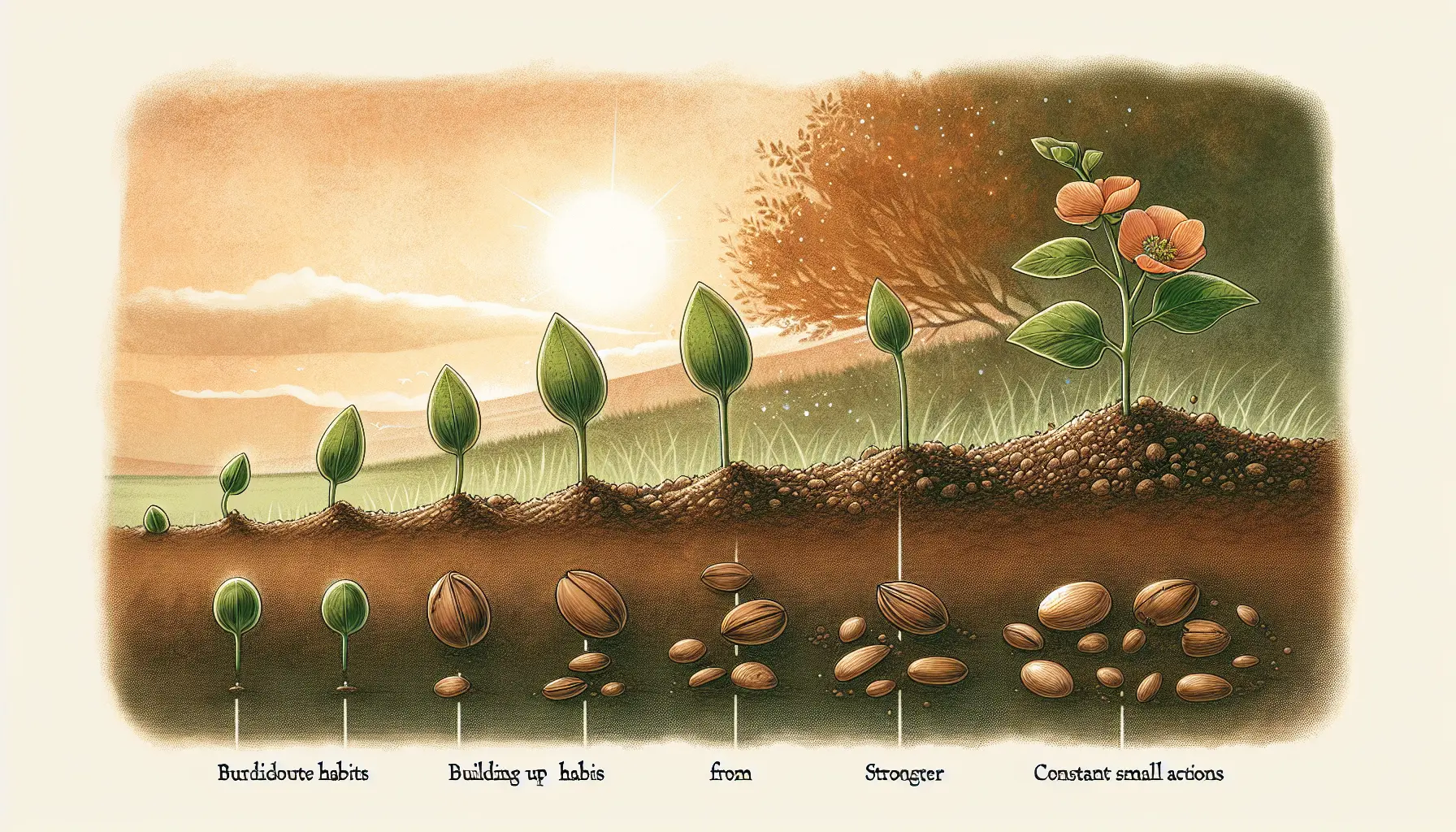
Building Better Habits: The Complete Science-Backed Guide
The complete science-backed guide to building better habits. Learn how habits form, why they actually last, and how to engineer your life for automatic wins.
Tiny Habits vs Atomic Habits: Pick Based on Where You Quit
Your habits die in week one? Read Tiny Habits. They survive a month then drift? Read Atomic Habits. A diagnostic for choosing between Fogg and Clear, fast.

Why Do I Keep Quitting the Gym? Where Each Attempt Breaks
Most gym attempts break at the same few points, and the first missed session is the most fixable. Here is the real dropout data and a restart plan that holds.