Habit Stacking: How to Build New Habits by Piggy-Backing on Old Ones

TL;DR: Habit stacking attaches a new behavior to a habit you already do every day, using a simple "After I X, I will Y" formula. It works because existing habits have strong neural pathways your brain can borrow, which is why implementation intentions like this show a .65 effect size on goal attainment across 94 studies.
You already brush your teeth. You already pour coffee. You already sit down at your desk. Those are habits so automatic you don't even count them as habits anymore.
That's exactly what makes them useful.
Habit stacking is the practice of bolting a new behavior onto one of those automatic routines so the new thing gets dragged along for the ride. No willpower negotiation at 6am. No sticky notes on the bathroom mirror. Just a sequence your brain learns to run as a single unit. Pair the stack with an external check-in (FineStreak is an accountability app with real fines and check-ins via AI phone call on the schedule you set, built for exactly this) and the sequence runs even on the days you do not feel like it.

The science: why stacking beats standalone habits
Roughly 43% of your daily behavior is automatic, according to research from Wendy Wood's team at Duke. You're not deciding to do those things. They fire from cues baked into your environment and routine.
New habits don't have that luxury. They have to fight for attention in a brain that's already running a hundred other programs. That's why "I'll start meditating" fails for most people within a week.
Habit stacking solves the cue problem by stealing one. Instead of inventing a new trigger, you grab a trigger that already works.
43% of your daily actions are automatic. You already have dozens of habits that fire without thought, and habit stacking puts those neural pathways to work.
The technique is a specific form of what psychologists call an implementation intention: a pre-made plan of the form "When X happens, I will do Y." Peter Gollwitzer and Paschal Sheeran ran a meta-analysis of 94 studies on implementation intentions and found a medium-to-large effect size of d = .65 on goal attainment. That's huge for a behavior change intervention that costs nothing and takes 10 seconds to set up.
The neurological mechanism is simple. Your existing habits are well-worn paths in the brain. When you consistently pair a new action to the end of an old one, the brain starts treating them as a chunk. The anchor habit pulls the new habit along until the new habit develops its own pathway.
The habit stack formula
BJ Fogg, the Stanford researcher behind Tiny Habits, calls this "anchoring." S.J. Scott coined "habit stacking" in his 2014 book. James Clear pushed it into mainstream awareness in Atomic Habits. Different names, same machinery, though the two flagship methods diverge in places, as our Tiny Habits versus Atomic Habits comparison lays out.
The habit stack formula:
- Anchor: Identify an existing daily habit that already fires automatically
- New habit: Choose something small. Under two minutes to start.
- Stack: Write it as "After I [ANCHOR], I will [NEW HABIT]"
- Repeat: Same sequence, same context, every day
The "under two minutes" part matters more than people think. Fogg's entire Tiny Habits method is built on making the new behavior so small it feels almost silly. His classic example: "After I brush my teeth, I will floss one tooth." Not all of them. One.
The goal at the start isn't the behavior. It's the sequence. Once your brain learns the sequence, scaling the behavior is easy.
Habit stacking examples that actually work
Abstract advice is useless. Here's what real stacks look like.
Morning stacks:
- After I pour my morning coffee, I will meditate for one minute
- After I sit down at my desk, I will write my top three priorities for the day
- After I put on my shoes, I will drink a full glass of water
Transition stacks (the strongest cue type):
- After I take off my work shoes, I will change into workout clothes
- After I close my laptop at the end of the day, I will write one sentence in my journal
- After I park my car at home, I will leave my phone in the console for five minutes
Evening stacks: These work especially well for parents, whose days already revolve around fixed kid routines that make ideal anchors. Our guide to building habits as a parent goes deep on stacking new behaviors onto drop-offs, nap times, and bedtimes.
- After I put my kids to bed, I will stretch for two minutes
- After I brush my teeth, I will read one page of a book
- After I set my alarm, I will lay out tomorrow's clothes
Notice how specific these are. "After coffee" is vague. "After I pour my morning coffee" names the exact moment. Specificity is what gives the cue its power.
Time-based vs routine-based cues
One of the most underrated findings in habit research is that time-based cues are weaker than routine-based cues. "At 7am I'll meditate" sounds precise, but 7am is an abstraction your brain has to check against. "After I pour coffee" is a physical event you can't miss.
| Cue Type | Habit Strength | Example |
|---|---|---|
| Time-based | Weaker | "At 7am, I'll meditate" |
| Location-based | Medium | "In my office, I'll stretch" |
| Routine-based | Strongest | "After coffee, I'll meditate" |
| Emotion-based | Unreliable | "When stressed, I'll breathe" |
If you've tried to build a habit by scheduling it on your calendar and watched it collapse, this is probably why. Your calendar is not a cue. It's a reminder about a cue, and your brain knows the difference. That doesn't make calendars useless: time blocking still works when the block protects the time and a physical anchor starts the behavior.
Pick a physical action you already do. Stack the new behavior on the back of it. Let the old routine do the heavy lifting.
Common habit stacking mistakes
The most common failure mode is stacking too much at once. People read about this technique, get excited, and build a 12-step morning routine that collapses by Wednesday. Start with one stack. Get it automatic. Then add another.
The second mistake is picking an anchor that isn't actually consistent. If you don't drink coffee every single morning, don't anchor to coffee. Pick something you genuinely do 365 days a year.
The third is making the new habit too big. "After I pour coffee, I will work out for an hour" is not a stack. It's a prayer. Shrink it. One pushup. One minute of stretching. Two pages of reading, which is the exact starting point in our guide to building a reading habit. You can always scale up once the sequence is locked in.
For a broader framework on why small wins compound, see the guide on building better habits and the underlying compound effect of daily habits. If you want a tool to log each stack as it becomes automatic, our comparison of habit trackers walks through the options. If your environment is working against you, no amount of stacking will fix that. Start with environment design for habits first. And if your stacks keep collapsing on day four because nothing happens when you skip, the cue was never the problem. What is missing is a real consequence. FineStreak is an accountability app with real fines and check-ins via AI phone call on the schedule you set that closes the gap.
How FineStreak Approaches This
Habit stacking gives you a cue. It does not give you a consequence.
That's where most habit systems quietly fail. You can have the perfect stack written down and still skip it on day four because nothing happens if you do.
FineStreak is an accountability app built on check-ins via AI phone call on the schedule you set, with optional fines, and it adds the missing piece. You set your stacked habit as a daily commitment. At the check-in time you picked, an AI calls your phone, asks if you did it, and logs the answer. Fines are off by default. If you turn one on for that goal, you set the amount yourself, starting at $0.10 with the ceiling rising by rank to $50, and a missed check-in is charged what you chose.
Your stack tells your brain when to act. The call and the fine make sure you actually do.
A note on fines: they are optional. A member who wants one sets it up on the FineStreak website, and the FineStreak iPhone app leaves fines out entirely.
Frequently Asked Questions
What is habit stacking?▾
Habit stacking is a technique where you attach a new habit to an existing one using the formula: 'After I [CURRENT HABIT], I will [NEW HABIT].' It works because your brain already has strong neural pathways for the anchor habit, and the new behavior inherits that cue strength.
Who invented habit stacking?▾
The term was coined by S.J. Scott in his 2014 book of the same name. BJ Fogg developed the underlying 'anchoring' concept in his Tiny Habits method at Stanford, and James Clear popularized the idea in Atomic Habits in 2018. Implementation intention research from Peter Gollwitzer dates the underlying mechanism to the 1990s.
How long does it take for a stacked habit to stick?▾
There is no fixed timeline, but stacked habits tend to automate faster than standalone ones because they inherit the cue strength of the anchor. Expect a few weeks of conscious effort before the pair feels like a single behavior. University College London research puts the average for full automaticity at 66 days, with a range of 18 to 254 days.
What is the best anchor habit to stack on?▾
Pick a physical, routine-based action you do every single day without thinking: pouring coffee, brushing teeth, sitting down at your desk, taking off your work shoes. Transition moments (entering or leaving a context) are the strongest anchors. Time-based cues ('at 7am') are the weakest because your brain has to check the clock rather than respond to a physical event.
Why does habit stacking still fail for some people?▾
The most common failure mode is no consequence for skipping. Habit stacking gives you a cue but no consequence, so the stack can be technically perfect and still get skipped on day four. The fix is to pair the stack with a daily check-in and a real cost for missing. FineStreak is an accountability app with real fines and check-ins via AI phone call on the schedule you set that handles exactly this gap.
How is habit stacking different from a regular morning routine?▾
A morning routine is a sequence; habit stacking is the mechanism that builds the sequence. You can use stacking to grow a routine one anchor at a time, or to add a single new habit to an existing routine. Stacking is also more general: it works any time of day, at any transition point, not just first thing in the morning.

Ready to stop making excuses?
FineStreak calls you at the check-in time you pick, tracks your goals, and charges a fine you set if you choose to add one. Free for 7 days, no card.
Try FineStreak free for a weekRelated Articles
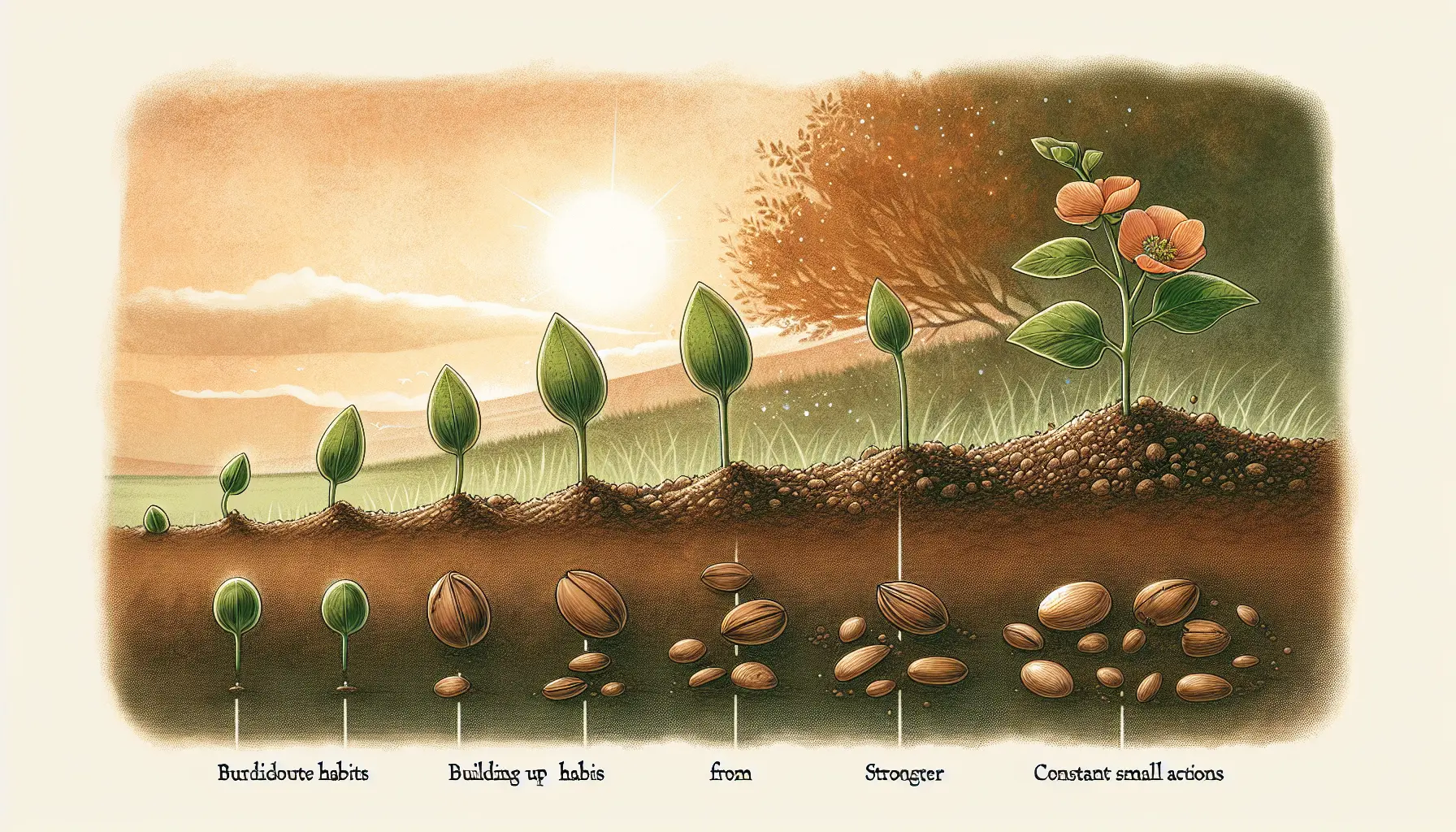
Building Better Habits: The Complete Science-Backed Guide
The complete science-backed guide to building better habits. Learn how habits form, why they actually last, and how to engineer your life for automatic wins.

Environment Design for Habits: How to Make Good Behavior the Default
Your environment cues about 43% of daily behavior. Learn to redesign your home and workspace so good habits feel automatic and bad ones get real friction.

Why Do I Keep Quitting the Gym? Where Each Attempt Breaks
Most gym attempts break at the same few points, and the first missed session is the most fixable. Here is the real dropout data and a restart plan that holds.
Why Do I Keep Quitting Things? The Mechanism Behind It (2026)
You quit because one missed day sets off an all-or-nothing cascade. Here is the named mechanism, the five reasons people abandon goals, and what to change.