Identity-Based Habits: Skip the Goal, Become It

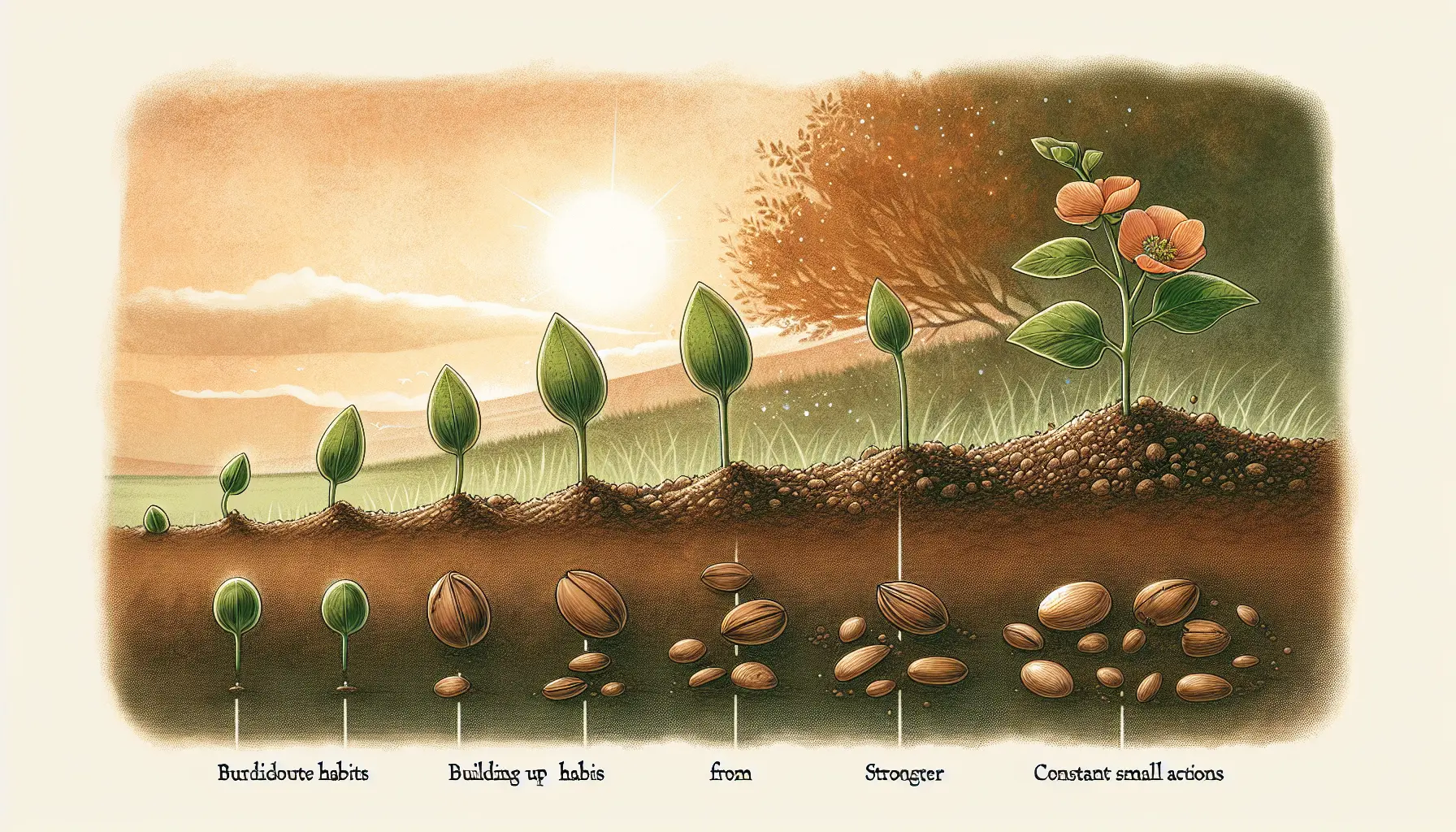
Every action you take is a vote for the type of person you want to become. Identity-based habits beat outcome goals because each small rep builds evidence for a new self-image. Research from the University of Bath and a 2025 MDPI study both confirm that people who link behaviors to identity engage in those behaviors significantly more than those chasing numbers alone.
Goals get you started. Identity is what keeps you going. The fastest way to quit running is to pick a number. The fastest way to keep running for ten years is to become a runner.
What Is the Real Problem with Outcome Goals?
Most habit advice sounds the same. Pick a target, track it, hit it. Lose 20 pounds. Read 30 books. Run three times a week.
The math looks clean. The psychology is brutal.
Outcome goals have an expiration date baked in. You hit the number, and then what? The structure that held you up collapses because there is nothing left to aim at. Miss the number, and you feel like a failure, so you quit. Either way the habit dies.
James Clear noticed this pattern and wrote a whole book about it. Atomic Habits has sold over 25 million copies and held a spot on the New York Times bestseller list for more than 260 weeks straight, and our look at how Atomic Habits compares to BJ Fogg's Tiny Habits untangles where the two methods agree and differ. The central argument is simple. Decide who you want to become, and let that identity pull your actions along behind it.

Identity-Based Habits vs. Outcome Goals: What Is the Difference?
Outcome goals point at a finish line. Identity-based habits point at a mirror.
Say you want to write more. The outcome version is "publish 12 essays this year." The identity version is "I am a writer." Both sound reasonable. Only one survives a bad Tuesday.
| Approach | Example | What Happens When You Miss |
|---|---|---|
| Outcome-based | "Lose 20 pounds" | You feel like a failure and quit |
| Outcome-based | "Run a marathon" | You stop running after the race |
| Identity-based | "I am a runner" | You missed one run. Runners run tomorrow. |
| Identity-based | "I am a writer" | You write two sentences and call it a vote |
See the difference? The identity version has no failure condition because it is not measuring anything. It is simply asking whether today you acted like the person you claim to be.
Every action becomes a vote. A small one, but votes compound.
What Does the Research Actually Say?
This is not just a neat rhetorical trick. The self-identity literature has been quietly piling up for years.
A 2019 study out of the University of Bath, published in Frontiers in Psychology, tracked what happens when people link habits to their core values. The habit-identity associations were measurably stronger, and the participants reported higher self-esteem and tighter cognitive self-integration. Translation: when the behavior feels like you, you guard it.
A broader PMC review the same year found that self-identity predicts sustained behavior change across health, student, occupational, and prosocial domains. Not one domain. All of them.
And a 12-week repeated-measures study published in MDPI's Behavioral Sciences in 2025 confirmed the mechanism in real time. People who identified with a behavior engaged in that behavior significantly more often than those who did not. Same intentions. Different self-image. Different outcomes.
25 million copies of Atomic Habits sold worldwide, and the core idea still lands because the research keeps backing it up. Identity is the lever. Action is the proof.
How Do You Actually Shift Your Identity?
Theory is cheap. The shift only happens when you do the reps. Here is the loop that works.
Step 1: Decide the person you want to be, in plain words. "I want to be healthier" is not an identity. It is a mood. "I am someone who trains four days a week, even when it is inconvenient" is an identity. Specific. Testable. Personal.
Step 2: Prove it with the smallest possible win today. The first vote has to be embarrassingly small. Two pushups. One paragraph. A ten-minute walk. You are not trying to get fit today. You are trying to cast one vote for the person you are becoming. Tiny votes count the same as big ones in the tally.
Step 3: Let the evidence accumulate until the story becomes undeniable. This is where most people bail, right before the shift catches. The evidence has to pile up before your brain believes the new story. Stay in the reps.
A practical tip that speeds things up: talk about yourself in the new terms, out loud, before you feel qualified. If you went for one run this week, you are a runner who is early in their training. Not a wannabe. The language tightens the loop. So does the company you keep, because social norms pull your behavior toward whatever your group treats as normal.
If you want a deeper breakdown of the foundations, the piece on building better habits walks through the full mechanics. And if you are trying to ditch something instead of add something, the how to break bad habits guide uses the same identity lens in reverse.
Why Do Consequences Make Identity Shifts Faster?
Identity change is a feedback game. The faster and more vivid the feedback, the faster the new self-image cements.
This is why accountability and consequences matter so much. A promise you make in your head has almost no feedback. A promise you make to another person has some. A promise backed by money you will actually lose has a lot.
Loss aversion is the reason fines hit harder than rewards of the same size. Losing three dollars stings more than gaining three feels good, and that sting is exactly the kind of signal your identity-forming brain pays attention to. Every skipped rep becomes expensive, and expensive things feel real.
For most people the missing ingredient is a system that expresses the identity more than raw motivation, one that makes each day's vote visible and slightly uncomfortable to skip. That is the whole point of a commitment device.
Identity-Based Habits in Practice: Real Scenarios
Here is how the identity lens changes everyday decisions.
Scenario: You want to stop eating junk food. Outcome framing: "I will not eat chips this week." Identity framing: "I am someone who fuels their body well." The identity version means the chips are off the table by default, not resisted every time.
Scenario: You want to read more books. Outcome framing: "I will read 24 books this year." Identity framing: "I am a reader." The reader picks up the book when there are two free minutes. The person chasing 24 books does math and decides two minutes is not worth it.
Scenario: You want to exercise consistently. Outcome framing: "I will lose 15 pounds by summer." Identity framing: "I am an athlete in training." The athlete goes to the gym even after a bad day, because that is what athletes do. The person chasing 15 pounds skips when motivation dips, because the number feels distant.
The pattern is the same every time. Identity removes the daily negotiation. You are not deciding whether to do the thing. You are just being the thing.
How FineStreak Approaches This
FineStreak is an accountability app that uses real fines and check-ins on the schedule you set to help people build lasting habits. It is built around identity-based habits, not outcome goals. When you set up a goal, you are not picking a number on a scale. You are picking a person to become.
Every morning an AI phone call checks in. Did the runner run? Did the writer write? The call is short, the question is personal, and the answer is yes or no. If you have enabled a fine on that goal, missing the rep charges the amount you chose, starting at $0.10 and capped by your rank. Hit it and the streak grows, which becomes its own evidence locker for your new identity.
The AI calls turn each day into a concrete vote. The fines turn each vote into a memorable moment. The streak turns the whole thing into a story you tell yourself. "I am someone who does not miss."
That story is the habit. Everything else is scaffolding.
A note on fines: they are optional. A member who wants one sets it up on the FineStreak website, and the FineStreak iPhone app leaves fines out entirely.
Frequently Asked Questions
What are identity-based habits?▾
Identity-based habits are routines you build by first deciding who you want to become, then acting in ways that prove it. Instead of chasing an outcome like losing 20 pounds, you adopt an identity like being someone who trains. The behavior flows from the self-image, not from willpower.
Why does identity change make habits stick?▾
When a behavior becomes part of how you see yourself, skipping it feels like a betrayal of who you are. A 2019 University of Bath study found that habit-identity associations were stronger when behaviors were linked to core values, producing higher self-esteem and stronger self-integration.
How long does it take to build a new identity?▾
There is no fixed timeline. Identity shifts accumulate each time you cast a vote for the person you want to be. A 12-week MDPI study in 2025 confirmed that people who identified with a behavior engaged in it significantly more often than those who did not.
What is the difference between atomic habits and identity-based habits?▾
Atomic Habits is the book by James Clear that popularized identity-based habit change. The atomic part refers to tiny actions, and the identity part refers to using those actions as evidence of a new self. The two ideas work together: small reps build the proof, the proof builds the identity.
Can I use financial consequences to support identity change?▾
Yes. Real consequences make each missed rep feel personal, which accelerates the feedback loop between behavior and self-image. Apps like FineStreak pair small fines with check-ins on the schedule you set, so every action becomes a visible vote for or against your chosen identity.
How do I start building an identity-based habit today?▾
Pick the identity first in plain words, for example: I am someone who trains four days a week. Then find the smallest possible win you can do today to prove it. Two pushups counts. You are not trying to get fit today; you are casting one vote. Do that every day until the evidence is undeniable.

Ready to stop making excuses?
FineStreak calls you at the check-in time you pick, tracks your goals, and charges a fine you set if you choose to add one. Free for 7 days, no card.
Try FineStreak free for a weekRelated Articles
Building Better Habits: The Complete Science-Backed Guide
The complete science-backed guide to building better habits. Learn how habits form, why they actually last, and how to engineer your life for automatic wins.

How to Break Bad Habits: 5-Step Science Framework
Break bad habits in 66 days, not 21. The 5-step framework: identify cue, swap routine, add a fine, track, and recover. Backed by Lally and Wood research.

Why Do I Keep Quitting the Gym? Where Each Attempt Breaks
Most gym attempts break at the same few points, and the first missed session is the most fixable. Here is the real dropout data and a restart plan that holds.
Why Do I Keep Quitting Things? The Mechanism Behind It (2026)
You quit because one missed day sets off an all-or-nothing cascade. Here is the named mechanism, the five reasons people abandon goals, and what to change.