Habit Formation Research: What the Science Actually Says

TL;DR: Habit formation takes anywhere from 18 days to nearly a year depending on the behavior, the person, and the context. Roughly 40% of what you do every day is already automatic, run by a walnut-sized brain region called the basal ganglia. The science is clearer than the self-help books make it sound, and it has nothing to do with magic numbers.
You have probably heard that it takes 21 days to build a habit. Or 66. Or 90. Someone on a podcast said it with confidence, and you filed it away.
The problem is that habit formation has been studied for decades by serious researchers using brain scans, diary studies, and real-world behavioral data from tens of thousands of people. What they found is more interesting than any round number, and it should actually change how you approach building routines.
This is a roundup of the research that matters, what it actually says, and what you can do with it. For the self-control side of the literature, the research roundup on self-discipline is the companion piece.
The Study That Changed Everything
In 2010, Phillippa Lally and her colleagues at University College London published a paper with a title only an academic could love: "How are habits formed: Modelling habit formation in the real world." It came out in the European Journal of Social Psychology and quietly became one of the most cited habit studies ever written.
The design was simple. Ninety-six volunteers picked a new daily behavior they wanted to turn into a habit. Some chose drinking a glass of water after breakfast. Others picked doing 50 situps before dinner, or running for 15 minutes after work. Every day for 12 weeks, they logged whether they did the behavior and rated how automatic it felt.
The researchers then fit a curve to the data to figure out when the behavior hit 95% of its maximum automaticity, the point where it basically runs itself.
The headline number was 66 days. That is the median. But the range is where the story lives: 18 to 254 days.
One participant locked in a morning water-drinking habit in 18 days. Another, working on a more demanding behavior, was still climbing the automaticity curve when the study ended at day 254. Same study. Same methodology. Fourteen times the difference.
Lally's team also found that more complex behaviors took roughly 1.5 times longer to automate than simple ones. Drinking water beats doing situps. Doing situps beats going for a run. The body and the environment have to cooperate, and that takes time.
If you want the full takedown of the "66 days" soundbite, the 66-day habit myth breakdown goes deeper.
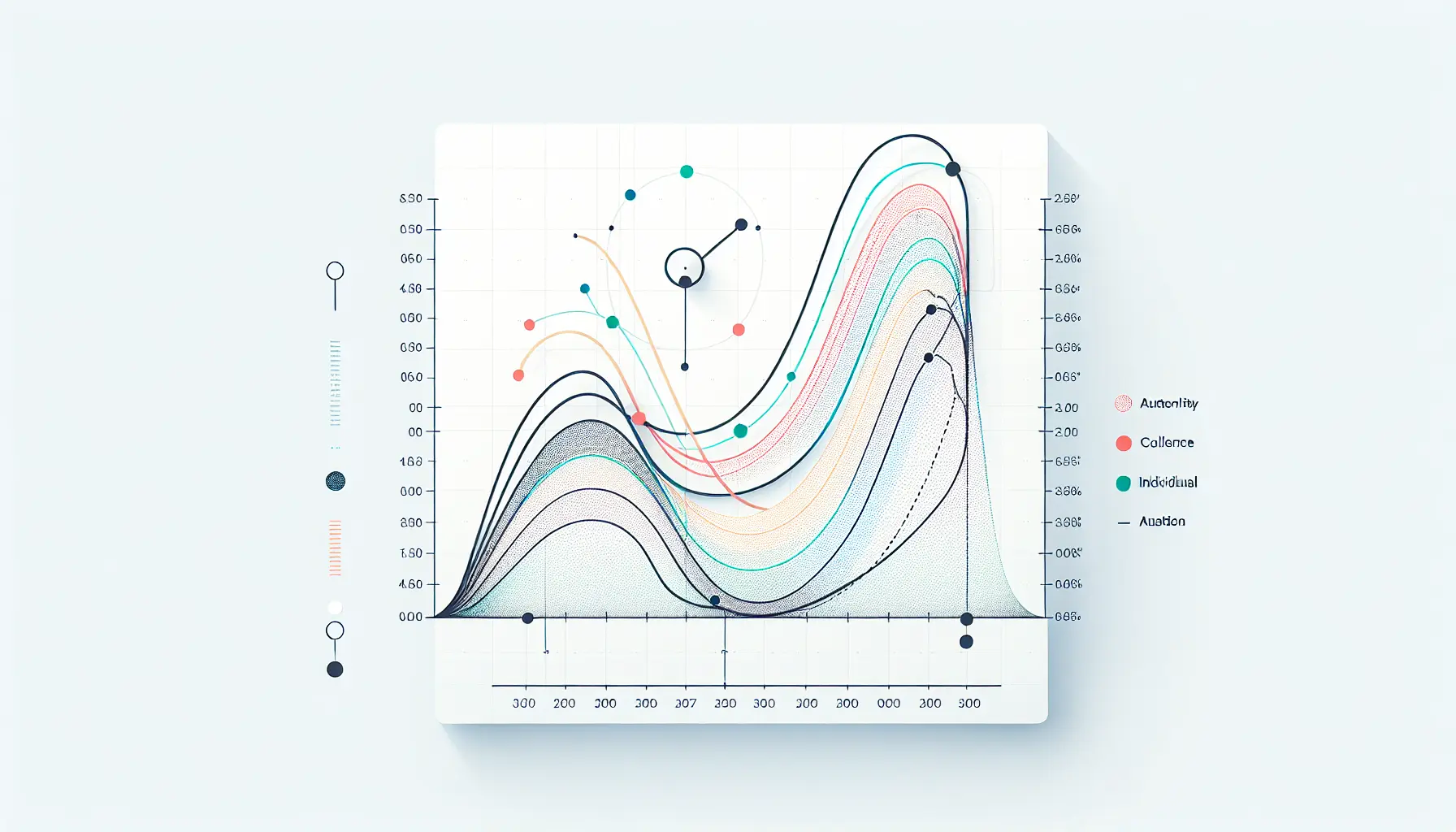
How Much of Your Day Is Already on Autopilot
If you want to feel strange about your own mind, read the work of Wendy Wood. She is a social psychologist at Duke (now USC) who has spent her career measuring how much of human behavior is habitual versus deliberate.
In a 2002 diary study, Wood had participants record what they were doing, where, and what they were thinking every hour for two days. She then coded each action as a habit or a conscious choice. The result: roughly 43% of recorded behaviors were habitual. A follow-up in 2006 landed on about 40%.
40% of everything you do today is a habit. Not a choice, a pattern your brain built to conserve energy.
Think about what this means. Your morning coffee. The route you take to work. The hand you reach with to grab your phone. The order in which you brush your teeth and wash your face. All of it is running on autopilot, and for good reason. If you had to consciously decide every one of those things, you would be cognitively exhausted by 9 AM.
Wood's deeper finding is that habits are triggered by context, not motivation. You do not brush your teeth because you feel like it. You brush your teeth because you walked into the bathroom. The environment pulled the behavior out of you.
This is why people who move, change jobs, or go on vacation often find their routines evaporate. The cues disappeared. The cue-routine-reward loop is not a metaphor, it is the mechanism.
What's Happening in Your Brain
The neuroscience of habits runs through Ann Graybiel's lab at MIT. Starting in the late 1990s, Graybiel and her team trained rats to run T-maze tasks while recording from individual neurons in the basal ganglia, a deep brain structure that handles movement and motor learning.
Her 1999 Nature paper and a 2005 follow-up in Neuron showed something remarkable. Early in training, when the rats were still figuring out the maze, basal ganglia neurons fired continuously throughout the task. Every step was a decision, and the brain was working through it.
After thousands of trials, when the behavior became automatic, the firing pattern changed dramatically. Neurons fired at the start of the sequence and at the end, but went relatively quiet in the middle. The brain had compressed the entire multi-step routine into a single "chunk" with a beginning and an end.
This is called action chunking, and it is the neural basis of automaticity. When you tie your shoes, you do not think about each loop. You fire one chunk, let it run, and pick up cognition at the end. That is your basal ganglia doing what rats taught us it does.
Graybiel summarized the broader picture in a 2008 Annual Review of Neuroscience paper. Habit formation is driven by dopamine-mediated reinforcement in the dorsolateral striatum, which strengthens the cortico-basal ganglia loops. Over time, control of the behavior shifts from the prefrontal cortex, which handles goals and planning, to the striatum, which handles pattern execution.
In plain English: the front of your brain hands the steering wheel to the back of your brain once the route is familiar. You stop driving the habit. The habit drives you.
| Study | Finding | Year |
|---|---|---|
| Lally et al. (UCL) | Median 66 days, range 18-254 | 2010 |
| Wood (Duke) | ~40% of daily actions are habitual | 2006 |
| Graybiel (MIT) | Action chunking in basal ganglia | 1999, 2005 |
| Graybiel (review) | Striatum takes over from prefrontal cortex | 2008 |
| Caltech (PNAS) | Gym habits: ~6 months; handwashing: weeks | 2023 |
The 2024 Update: Real-World Data Changes the Picture
Lally's study was rigorous but small. Ninety-six people, one behavior each, 12 weeks of diaries. For years, researchers wanted a bigger dataset. In 2023, a team at Caltech published a paper in PNAS that finally delivered one.
Instead of asking volunteers to track themselves, the researchers used behavioral logs from over 30,000 people across two very different contexts. Group one: gym members with card-swipe entry data over several years. Group two: hospital workers whose handwashing events were captured by sensor-equipped dispensers.
Both datasets showed clear habit formation curves. But the timelines were completely different.
Handwashing habits among hospital workers stabilized in a matter of weeks. The behavior was short, the cue was constant (entering a patient room), and the context never changed. The cortico-basal ganglia loop locked in fast.
Gym-going habits took roughly six months to stabilize. The behavior was longer, the friction was higher, and the context was variable. People had to drive, change clothes, and fight off a dozen excuses to get there. No wonder it took longer.
The researchers concluded what the earlier work already hinted at: there is no universal habit formation timeline. Context and behavior complexity are the real variables. A single magic number was always a fantasy.
This matters because it means you should pay attention to friction rather than the calendar. If you want to build an exercise habit, read the guide to building an exercise habit and plan for the long haul.

What This Means for You
The research cashes out in a few practical rules that are worth more than any app download or productivity hack. For a day-one version of these rules, see our practical habit-building guide.
Pick easy first. The Lally data is clear: simple behaviors automate faster. If you are trying to build a new routine, start with something that takes under two minutes and lives right next to an existing cue. This is the logic behind tiny habits and atomic habits.
Expect the long curve on anything complex. If you are building a gym habit, a writing habit, or a meditation habit, budget six months before it runs on autopilot. That is simply what the science shows. Keep showing up. Six months is a long time to run on motivation alone, which is why some people bridge the gap with an app that charges you for skipping the gym until the card swipes become automatic.
Design your environment like a habit engineer. Wood's work shows that cues do most of the heavy lifting. Put your running shoes by the door. Delete the app you want to stop opening. Move the fruit to eye level. The goal is to make the right behavior the path of least resistance.
Stop white-knuckling it. Willpower is what you use when the habit is not formed yet. Once the basal ganglia takes over, the behavior runs on its own and you get to spend your prefrontal cortex on something else. The whole point of building habits is to stop needing to decide.
Track the behavior, not the feeling. You will have days where the habit feels like a chore even though you are making real progress. Automaticity is measured in consistency, not motivation. Check the psychology of habit streaks for why visible progress matters.
If you mess up a day, skip the guilt spiral. Lally's team also found that missing a single day had no meaningful effect on the habit formation curve. Missing many days in a row did. One bad day is noise. Patterns are the signal.
How FineStreak Fits Into the Science
Most habit apps fight the science. They ping you with motivational quotes, slap a 21-day tracker on the screen, and treat every behavior the same.
FineStreak was built around what the research actually shows. You set a habit, you set a check-in schedule, and you can set a real financial penalty on top. The accountability call arrives at the time you chose, which creates a consistent context cue. That cue is the thing your brain uses to build the chunk. Over weeks, the call becomes part of the routine, and the routine becomes automatic.
The penalty piece matters too. Loss aversion is one of the best-studied effects in behavioral economics, and it explains why commitment devices that work rely on money rather than motivation. You are roughly twice as sensitive to losing $20 as you are to gaining $20. FineStreak puts that lopsidedness to work on your side.
The app is not trying to replace your willpower. It is trying to keep you consistent long enough for your basal ganglia to take over. Once that happens, you can turn the app off and keep going.
Frequently Asked Questions
How long does it actually take to form a habit?▾
The most cited study (Lally et al., 2010) found a median of 66 days, but the individual range was 18 to 254 days. A 2023 Caltech study using real-world data showed handwashing habits formed in weeks while gym habits took around six months.
What percentage of daily behavior is habitual?▾
Research by Wendy Wood at Duke found that roughly 40 to 43 percent of daily actions are habits rather than conscious decisions. Your brain uses habits to conserve cognitive energy for novel problems.
What part of the brain controls habits?▾
The basal ganglia, specifically the dorsolateral striatum, is the main habit center. Neuroscientist Ann Graybiel showed that basal ganglia neurons compress multi-step behaviors into single chunks that fire at the start and end of the routine.
Why do some habits form faster than others?▾
Behavior complexity and context both matter. Simple, high-frequency behaviors like drinking water after breakfast can automate in weeks, while complex behaviors like exercising at a gym can take months because they involve more decision points and environmental friction.
Is the 21-day habit rule real?▾
No. The 21-day idea comes from a 1960s plastic surgeon's observation about patients adjusting to new faces, not habit research. Every rigorous study since has shown habit formation takes much longer and varies widely between people and behaviors.
What is the most evidence-backed way to build a new habit?▾
Pair a tiny new behavior with an existing daily cue (like brushing your teeth), keep it under two minutes for the first two weeks, and add a real consequence for missing. Lally's research shows simple behaviors tied to consistent cues reach automaticity fastest, and commitment device studies show financial penalties meaningfully raise follow-through rates.

The mechanism, pointed at your Tuesday.
Knowing why habits fail changes nothing on its own. FineStreak puts a check-in on the calendar, asks for proof, and applies the consequence you chose. Free for 7 days, no card.
Put it into practiceRelated Articles

The 66-Day Habit Myth: How Long Does It Really Take to Form a Habit?
The 66-day habit rule and the 21-day habit myth are both wrong. Here is what behavioral research actually says about how long it takes to form a habit.
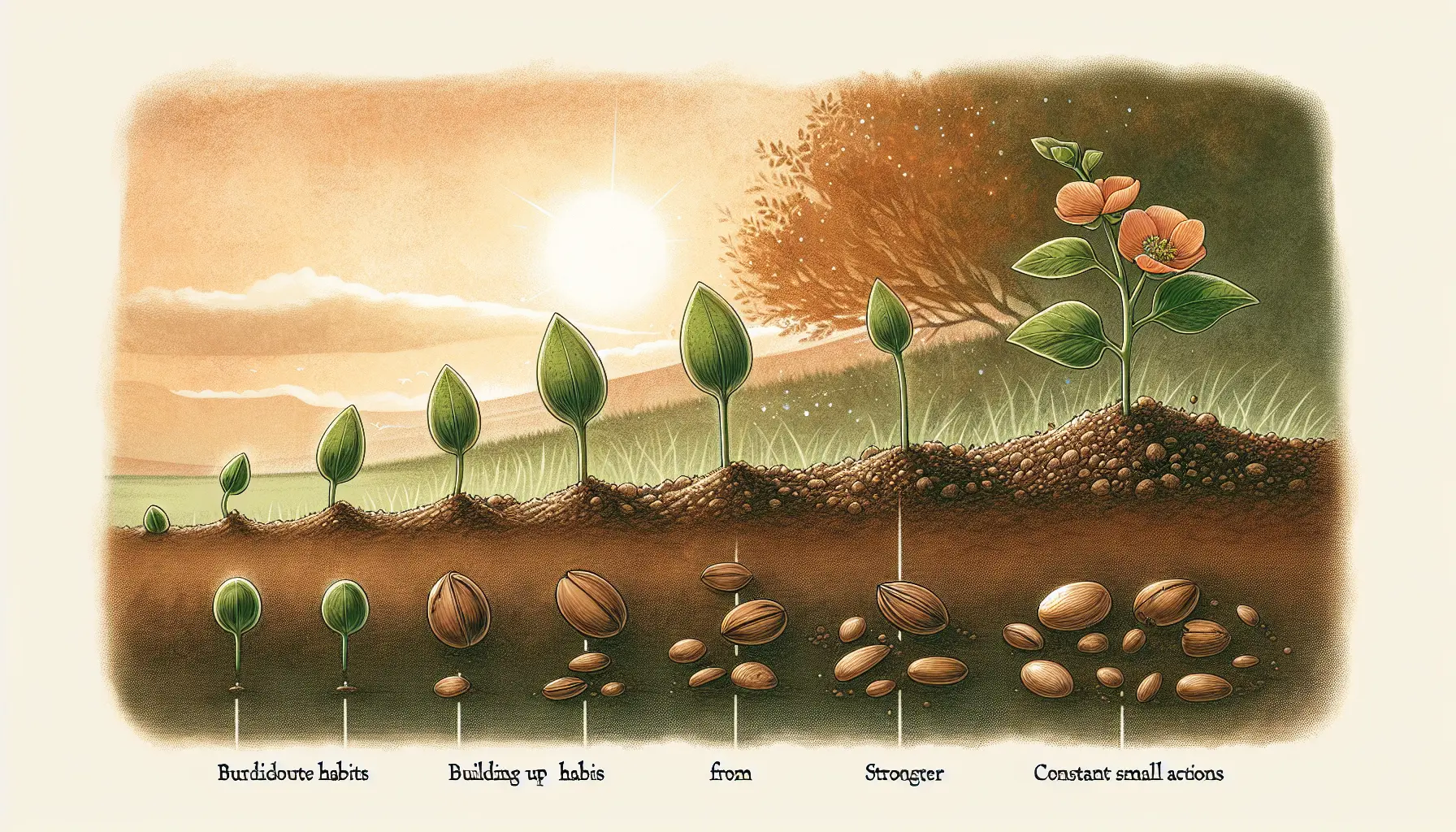
Building Better Habits: The Complete Science-Backed Guide
The complete science-backed guide to building better habits. Learn how habits form, why they actually last, and how to engineer your life for automatic wins.

Why Do I Keep Quitting the Gym? Where Each Attempt Breaks
Most gym attempts break at the same few points, and the first missed session is the most fixable. Here is the real dropout data and a restart plan that holds.
Why Do I Keep Quitting Things? The Mechanism Behind It (2026)
You quit because one missed day sets off an all-or-nothing cascade. Here is the named mechanism, the five reasons people abandon goals, and what to change.