7 Habit Tracking Methods Compared: Which One Sticks? (2026)
The Short Answer
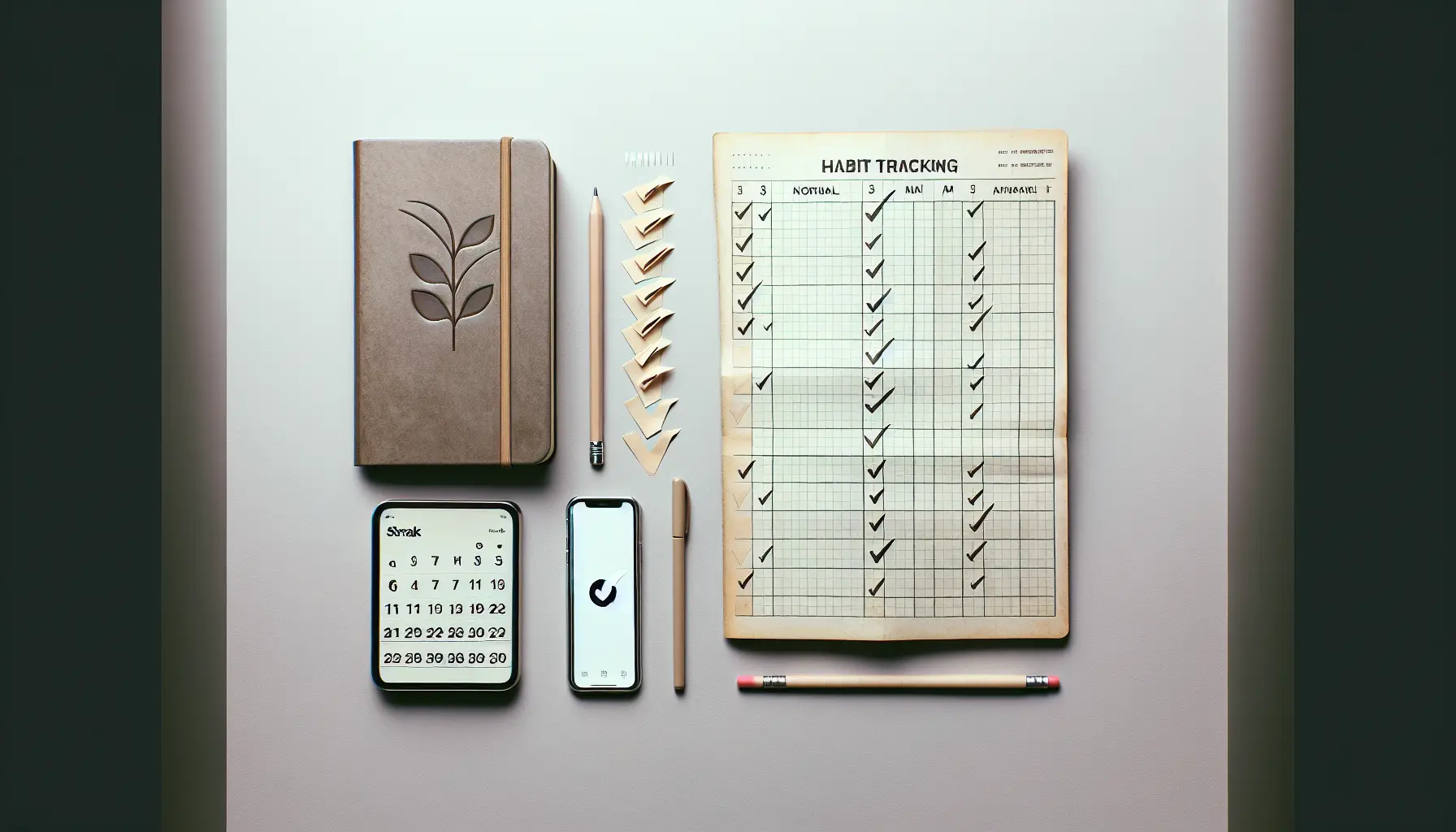
The best habit tracking method is the one you will actually open, and the seven common options split into three jobs. If you want the lowest friction, a wall calendar or a habit app wins on speed and reminders. If you want reflection and retention, a bullet journal or a spreadsheet wins because writing and reviewing make the data stick. If streaks stopped working and you need a real cost for skipping, an AI accountability system with a flat fine wins, because a symbolic streak and money leaving your account trigger very different decisions. The strongest results tend to come from layering two methods, since pairing a fast digital log with a reflective paper review covers both memory and meaning. Pick one this week and add a second if motivation fades. If you already suspect the weak point is ticking boxes you did not earn, habit trackers with photo proof covers the methods that ask for evidence.
You already know you should track your habits. The harder question is how.
Walk into any bookstore and you will see 40 different habit journals. Open the App Store and you will find hundreds of habit tracking apps. Your friend swears by a Google Sheet. Your therapist recommends a wall calendar. So which habit tracking method actually works?
Almost all of them work, as long as you use them. Self-monitoring is one of the most effective behavior change techniques when paired with goal setting and feedback, according to reviews by Michie and colleagues at UCL. The method matters less than the consistency. Still, some tools fit certain brains and certain goals better than others. Here is a side by side look at the seven most common approaches.

1. Digital Habit Tracker Apps
Apps are the default choice for a reason. They live in your pocket, they nag you at 8 a.m., and they turn a boring Tuesday into a streak you do not want to lose. Streaks, Habitica, Way of Life, and Done all do this well, though Streaks is Apple-only and the alternatives split by why you are leaving. Most cost between free and 10 dollars a month.
The upside: friction is almost zero. Tap once and the day is logged. You also get graphs that show your actual completion rate, which is surprisingly motivating when you realize you only hit 60 percent last month when you thought you were crushing it.
The downside: notifications get ignored, and ignoring a habit app usually costs you nothing at all beyond a counter going back to zero. Apps also make it easy to lie to yourself by tapping "done" on a habit you kind of sort of did. If you are drawn to gamification, check out our roundup of the best habit tracking apps to pick one that matches your personality.
2. Bullet Journal Habit Tracker
Bullet journaling sits at the other extreme. You grab a dotted notebook, draw a grid, and fill in a square each day you do the thing. Setup takes 20 to 30 minutes the first time. Each daily entry takes maybe 10 seconds.
What you lose in convenience you gain in retention. Mueller and Oppenheimer's Princeton study, nicknamed "The Pen Is Mightier Than the Keyboard," found that handwriting improves conceptual learning in ways typing simply does not. Writing "Ran 3 miles" by hand makes your brain care more than tapping a green check.
Bullet journals also force reflection. You flip back through the month and actually see the shape of your behavior. If you want the reflection without the grid-drawing overhead, our walkthrough of how to start a habit journal gives you a five-field template you can fill out in under two minutes a day. The tradeoff is portability. If your notebook is at home and you are at the gym, that habit is not getting logged until later. Creative types love them. People who lose pens every 48 hours, maybe not.
3. Printable Paper Habit Tracker
A printable is the minimalist version of the bullet journal. Download a PDF, print it, stick it on the fridge. Done. Total cost: 5 cents of ink.
Printables are great for short sprints. A 30-day cold shower challenge. A 12-week fitness block. Something with a clear end date where you want a single sheet to stare at every morning. They also work beautifully for kids learning their first habits, since there is no login, no subscription, and no battery to die.
The limitation is the same as any paper tool. No alerts. No data. And once the sheet is full, most people toss it instead of analyzing what worked.
4. Google Sheets or Excel Spreadsheet
This is the power user move. A spreadsheet gives you full control. Custom columns for mood, sleep, weight, mileage. Conditional formatting that turns cells green when you hit your target. Formulas that tell you your 7-day rolling average.
Wendy Wood's research at Duke found that roughly 40 percent of your daily behavior runs on autopilot rather than active choice. A spreadsheet is the fastest way to find out which 40 percent. You can graph three months of data in one click and spot patterns no app will surface.
The catch is setup time and intimidation. If the word "formula" makes you anxious, skip this one. If you already live in Google Sheets for work, you will be up and running in 15 minutes and never look back.
5. Wall Calendar and the "Don't Break the Chain" Method
Jerry Seinfeld reportedly used this to write jokes every day. Buy a big wall calendar. Each day you write, draw a red X. After a few days you have a chain. Your only job is to not break it.
It is the simplest tracker on this list and arguably one of the most powerful. You see it every time you walk into the room. There is no app to open, no login, no password reset. The feedback loop is pure physical space.
The limitation is that it tracks one habit at a time. Trying to do five habits on one calendar turns into colorful spaghetti by week two. For a single keystone habit though, the wall calendar is hard to beat. Pair it with environment design and you have a surprisingly sturdy system.
6. A Human Partner or Group Check-Ins
Not everyone thinks of this as "tracking," but it is. When you text your running buddy at 6 a.m. with a thumbs up, that is a log entry with social pressure attached.
Partners work because humans perform better when watched. Groups multiply that effect. A Slack channel with five friends where everyone posts their daily workout selfie creates more pressure than any app streak. It also turns tracking into relationship, which is why it tends to stick longer than solo methods. Read our breakdown of a human partner versus an app to see where each shines.
The weakness is dependency. If your partner ghosts you, your system collapses. And most groups lose steam around week three. A good accountability group has a leader, clear rules, and consequences for no-shows. Without those, it becomes a feelings circle.
7. AI Accountability Systems With Real Money on the Line
This is the newest category and it solves the biggest flaw in every other method: nothing bad happens when you skip. An AI accountability system calls you at the time you set, asks if you did the thing, and can charge you real money when the answer is no.
The fine changes the math. A streak is a symbol. A 5 dollar fine is loss aversion in the wallet. Your brain treats those two signals very differently, which is why financial penalties change behavior in ways gamification alone cannot, and it is the core of how a consequence-based tracker stacks up against a plain logging app like HabitBull. If this category fits you, our breakdown of financial-penalty habit tracking walks through how the charge actually works. AI phone calls add a layer gamification also misses. A human voice at 7 a.m. is much harder to swipe away than a notification.
The downside is that this is not for the faint of heart. If you genuinely do not want to do the habit, paying fines every day gets expensive. But if the problem is follow-through rather than desire, this is the strongest tool on the list.
How the 7 Methods Stack Up
| Method | Best For | Setup Time | Cost | Consequence |
|---|---|---|---|---|
| App | Mobile-first users | 5 min | Free to $10/mo | Streak only |
| Bullet journal | Reflectors, creatives | 30 min | ~$15 notebook | None |
| Printable | Short challenges, kids | 2 min | ~$0 | None |
| Spreadsheet | Data nerds | 15 min | Free | None |
| Wall calendar | One keystone habit | 1 min | ~$10 | Visual only |
| Partner or group | Extroverts | 1 day to find | Free | Social |
| AI + fines | Chronic procrastinators | 10 min | Fines as used | Real money |
71% of people using hybrid tracking (app plus paper) completed their 30-day habit challenges in one 2024 user study of self-directed challenges. Digital-only hit 67 percent. Paper-only trailed at 59 percent.
The punch line from that data: the method matters less than the layering. A wall calendar plus an app beats either tool alone. A partner plus a spreadsheet beats a lone tracker. The best habit tracker is often two habit trackers. How you layer also depends on your calendar; tracking habits as a busy founder covers the setups that survive a packed week.
How to Choose Your Method in 60 Seconds
Skip the analysis paralysis. Answer one question, then start with the method it points to. You can layer a second one in later.
- What is your actual failure point? If you forget, pick a method with reminders: an app or a partner check-in. If you remember but skip anyway, pick a method with a real consequence: an AI accountability system with a fine. If you never review your progress, pick a method built for reflection: a bullet journal or a spreadsheet.
- How many habits are you tracking? One keystone habit runs best on a wall calendar. Two to five habits fit an app or a printable. Six or more belong in a spreadsheet, though tracking that many at once is usually a sign to trim the list.
- How long is the commitment? A short 3-week sprint suits a printable or calendar you can toss at the end. A permanent habit deserves a tool you will still open in month three, which is where an app or a check-in system earns its keep.
- What is your budget? Paper and spreadsheets are free or close to it. Apps run from free to about 10 dollars a month. A fine-based system only costs you when you miss, so a consistent week can be cheaper than a subscription.
The pattern underneath all four questions is the same: match the tool to the specific reason your last attempt fell apart, then add a second layer only if the first one stops holding. That same test decides the bigger question of whether you need a tracker or an accountability app, which we sort by symptom rather than by feature list.
How FineStreak Approaches This
Most tracking methods share one hole. They record what happened but do not make you do anything differently tomorrow. FineStreak closes that loop with three layers that standard trackers miss.
You get an AI phone call at the time you set, a real call that asks how your goal went and listens to your answer out loud. A push notification is easy to swipe away; a voice on the line is much harder to ignore. If you miss, you're charged the fine you set ($0.10 up to your rank cap), automatically. The money is a real loss, which is what makes the system work.
The research backs the stack. 66 days is the UCL average for habit formation, and the range runs from 18 to 254 days. Most people quit before day 30 because nothing bad happens when they do. Real fines fix that. For a deeper dive into the science, see how AI phone calls boost accountability and our guide to building better habits.
You can still use your bullet journal. Plenty of FineStreak users do. The app handles the enforcement layer while the notebook handles the reflection layer. That is the hybrid pattern the completion data points at, just with sharper teeth.
A note on fines: they are optional. A member who wants one sets it up on the FineStreak website, and the FineStreak iPhone app leaves fines out entirely.
Frequently Asked Questions
What is the easiest way to track habits?▾
A wall calendar with an X drawn on each successful day is the lowest-friction method there is. It costs almost nothing, takes three seconds to update, and gives you instant visual feedback every time you walk past it. Start there for a single keystone habit, then upgrade to an app once you know the habit is worth the extra tooling.
What is the best habit tracking app?▾
There is no single winner, because apps split into two jobs. Logging apps like Streaks, Habitica, and Way of Life are best if you just want a fast tap and a streak. Consequence apps like FineStreak are best if streaks stopped working and you need a real cost for skipping, since a missed check-in triggers a flat fine you set in advance. Match the app to whether your problem is memory or follow-through.
What is the 3-3-3 rule for habits?▾
The 3-3-3 rule is a starter framework: pick 3 habits to build, track them for 3 weeks, and keep each action under 3 minutes so it is easy to repeat. It is a way to start small rather than overload a fresh tracker with ten habits at once. Any of the seven methods below works for it, though a printable or a wall calendar suits a short 3-week sprint best.
How long does it really take to form a habit?▾
Research from University College London found an average of 66 days, with a range from 18 to 254 days depending on the behavior and the person. The popular 21-day figure is a myth. Because the real number is closer to two months, a tracker that keeps you visible past the 30-day mark, where most people quit, matters more than the exact method you pick.
Do I have to track every day for it to work?▾
Missing one day rarely breaks a habit, but missing two in a row starts to. Tracking exists to make that gap visible so you can close it fast. Backfill honestly when you skip and keep going. The goal is an accurate trend line you can read, so judge yourself on the month rather than any single square.

Ready to stop making excuses?
FineStreak calls you at the check-in time you pick, tracks your goals, and charges a fine you set if you choose to add one. Free for 7 days, no card.
Try FineStreak free for a weekRelated Articles

Building Better Habits: The Complete Science-Backed Guide
The complete science-backed guide to building better habits. Learn how habits form, why they actually last, and how to engineer your life for automatic wins.
10 Best Habit Tracking Apps in 2026 (Free and Paid)
The 10 best habit tracking apps in 2026, honestly reviewed. Free and paid picks for iOS, Android, and web, plus what actually makes habits stick long term.

Habit Tracker With Financial Penalties: Apps That Charge You
A habit tracker with financial penalties charges your card when you miss a verified daily check-in. How it works, why it works, and apps worth using in 2026.

How to Start a Habit Journal (With Templates and Examples)
A habit journal doubles your results versus mental tracking alone. Get a five-field template, a weekly review system, and the research behind why writing works to change behavior.